
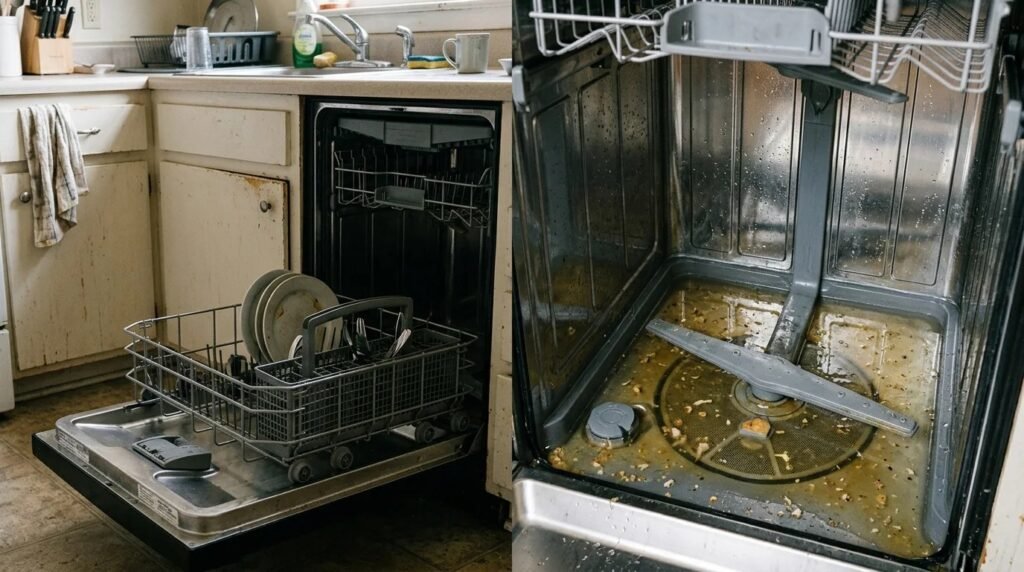
A dishwasher not draining is usually caused by a clogged filter, a blocked garbage disposal connection or a kinked drain hose, and you can fix most of these yourself in under 30 minutes. Start with the filter at the bottom of the tub, because it’s the most common culprit by far.
Contents
Opening the door to a puddle of gray water is gross, but it rarely means the machine is broken. Work through the fixes below in order, from easiest to hardest. All you need is a towel, a cup, a soft brush and maybe a flashlight.
Short answer
Turn the dishwasher off, scoop out the standing water with a cup and towels, and clean the filter. If that doesn’t help, check the garbage disposal, the drain hose and the air gap. A bad drain pump is possible, but it’s the least likely cause.
Dishwasher not draining: 7 fixes in order
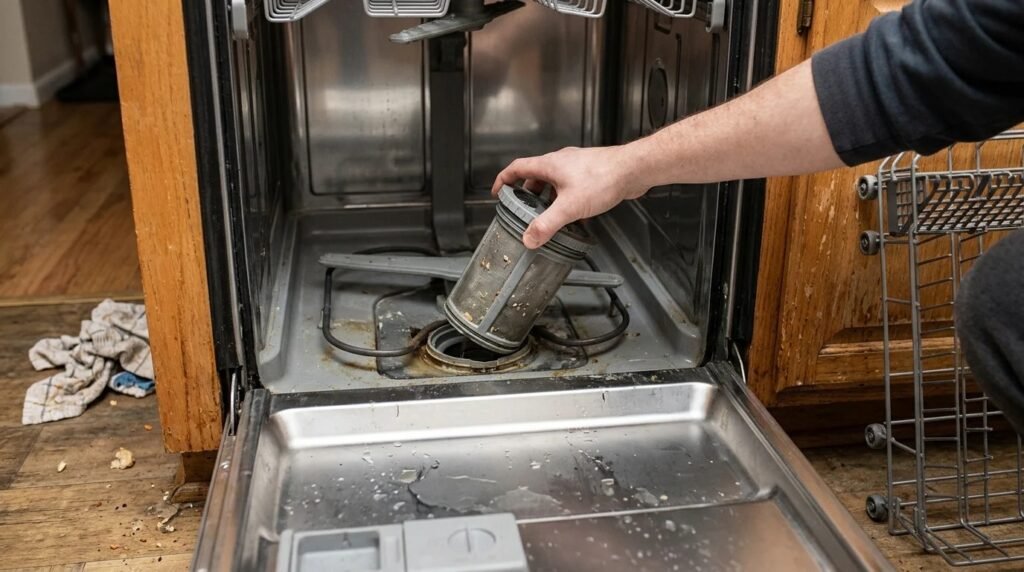
- Clean the filter. Twist out the cylindrical filter under the bottom rack, rinse it under the tap and scrub the mesh with a soft brush. A clogged filter traps water in the tub.
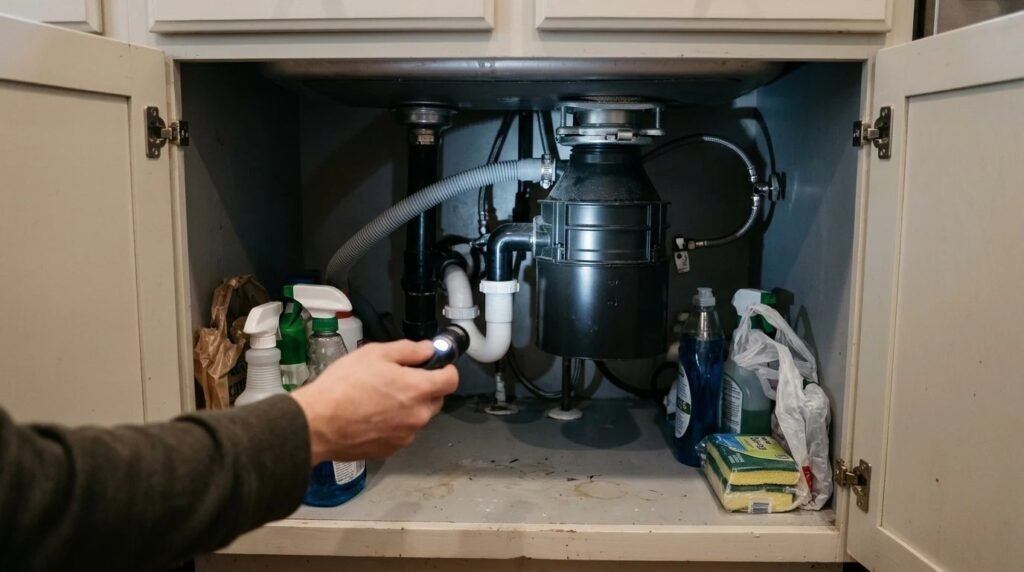
- Run the garbage disposal. Many dishwashers drain through the disposal. If it’s full of food, the water has nowhere to go, so run it with cold water for 20 seconds.
- Check for a new disposal plug. If the disposal was just installed, the knockout plug inside the inlet may still be in place. Your dishwasher maker’s guide, like this GE Appliances support page, lists this as a classic cause.
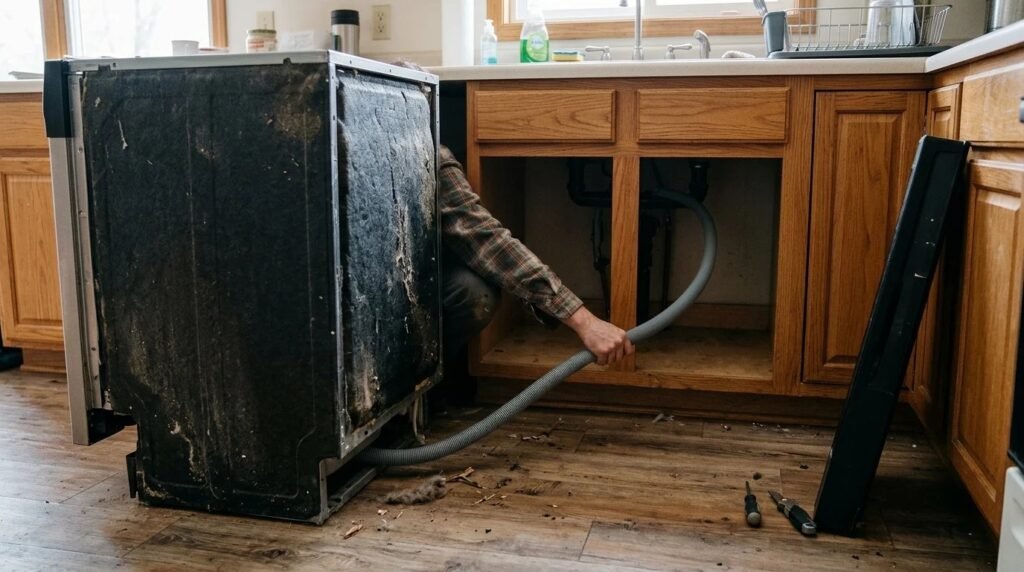
- Straighten the drain hose. Pull the dishwasher out a little and look for a kink or a pinched spot behind it.
- Clean the air gap. If you have a small metal cap next to the faucet, pull it off and clear any gunk inside.
- Check the sink drain. If the kitchen sink is slow too, the clog is in the house plumbing, not the dishwasher.
- Try a reset. Cut power at the breaker for a minute, then run a short rinse cycle.
Common causes and what to check
| Cause | Sign | Fix |
|---|---|---|
| — | — | — |
| Clogged filter | Dirty water around the filter | Remove and rinse the filter |
| Full disposal | Sink also smells or backs up | Run the disposal with cold water |
| Knockout plug | Disposal is brand new | Remove the plug inside the inlet |
| Kinked hose | Problem started after moving it | Straighten or replace the hose |
| Blocked air gap | Water spills from the sink cap | Clean the air gap |
| Failed drain pump | Humming but no draining | Call a repair pro |
Tips to keep it draining
- Scrape plates, don’t rinse them spotless. Big scraps clog the filter, but a little residue helps the detergent work.
- Clean the filter monthly. Our guide on how to clean a dishwasher filter walks through it.
- Run the disposal first. Do it every time before you start the dishwasher.
- Use the right detergent. Too much soap or the wrong kind can leave suds that slow draining.
When a dishwasher not draining needs a pro
If you’ve cleaned the filter, cleared the disposal and checked the hose, and the tub still holds water, the drain pump or its motor may have failed. A humming sound with no draining is a common sign. At that point, a repair visit usually beats taking the machine apart yourself.
Quick FAQ
Can I run a dishwasher that won’t drain? It’s best not to; standing water can overflow and smell, so fix the cause first. Does vinegar fix a clogged dishwasher? It can help loosen grease once the filter is clean, but it won’t clear a solid blockage. Why is there water in my dishwasher after a cycle? A small amount under the filter is normal; an inch or more means a drain problem.
Recap
- Start simple: filter first, then the disposal.
- Look behind it: kinked hoses and blocked air gaps are easy to miss.
- Know when to stop: humming with no draining often means a pump problem.
Final thoughts
Most drain problems come down to food where it shouldn’t be. Keep the filter clean and the disposal clear, and the machine will thank you. If smells linger, see how to clean a garbage disposal.
Your turn: what finally fixed your dishwasher? Share it in the comments.
This guide is based on research and manufacturer guidance, not our own testing.
Related guides: Dishwasher vs hand washing · How to clean a dishwasher filter