

What size air purifier do I need? It is one of the most common questions before buying, because an air purifier that is too small for the room will run, make some noise and not do much. Picking the right size takes about two minutes once you know two numbers, and this guide answers “what size air purifier do I need” with a simple formula and a worked example.
What size air purifier do I need? The number that matters: CADR
CADR stands for Clean Air Delivery Rate. It tells you how much filtered air a purifier delivers per minute, measured in cubic feet per minute (CFM). Manufacturers often test and list CADR separately for smoke, dust and pollen. A higher number means the machine cleans a bigger volume of air faster.
When you are comparing models, look for the CADR rating rather than only the “covers up to X square feet” claim on the box, because that claim can be based on different assumptions from brand to brand.
A simple rule of thumb
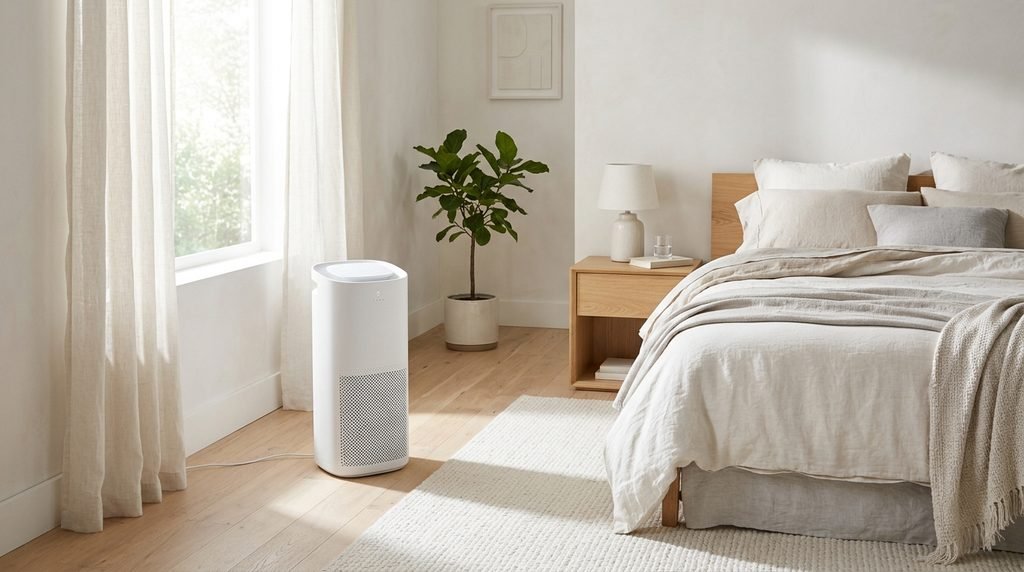
A common guideline is that a purifier’s CADR should be at least about two-thirds of your room’s floor area in square feet, assuming a standard ceiling around 8 feet.
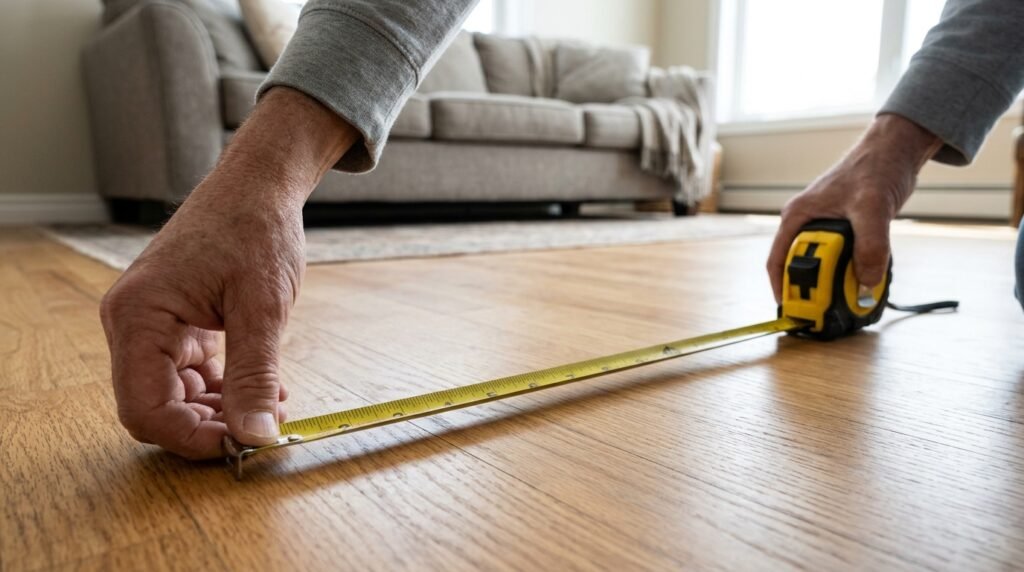
Step 1: Measure your room. Multiply length by width.
Step 2: Multiply by two-thirds. That is the minimum CADR to look for.
Worked example: A bedroom that is 12 feet by 15 feet is 180 square feet. Two-thirds of 180 is 120, so you would look for a purifier with a CADR of about 120 or higher.
Why that works: air changes per hour
Another way to think about it is air changes per hour, or ACH. This is how many times the purifier can filter all the air in the room in one hour. You can calculate it like this:
ACH = (CADR x 60) / room volume in cubic feet
Using the same bedroom: 180 square feet x 8 feet = 1,440 cubic feet. With a CADR of 120, that is (120 x 60) / 1,440 = 5 air changes per hour. Many people aim for somewhere around 4 to 5 ACH in rooms where they spend a lot of time, such as bedrooms and living rooms.
Adjust for your situation
The formula is a starting point. Go a size up if:
- Your ceilings are higher than 8 feet.
- The room is open to a hallway or another room.
- You have pets that shed or you cook often.
- You want to run the purifier on a lower, quieter setting most of the time. A bigger unit on low is often quieter than a small unit working hard.
Quick size guide
Use this as a rough reference only. Always check the CADR on the specific model.
- Small rooms (up to about 100 sq ft): a CADR of roughly 65 or higher
- Medium rooms (about 150 to 200 sq ft): a CADR of roughly 100 to 135
- Large rooms (about 300 sq ft): a CADR of roughly 200
- Open-plan spaces: consider more than one unit, or a unit with a much higher CADR
Don’t forget these
- Noise. Check the decibel level on the lowest setting, especially for a bedroom.
- Filter costs. Replacement filters are an ongoing expense. Look up the price and how often it needs changing before you buy.
- Placement. Keep the purifier a few inches away from walls and furniture so air can flow in and out.
Quick example: a 300 square foot living room
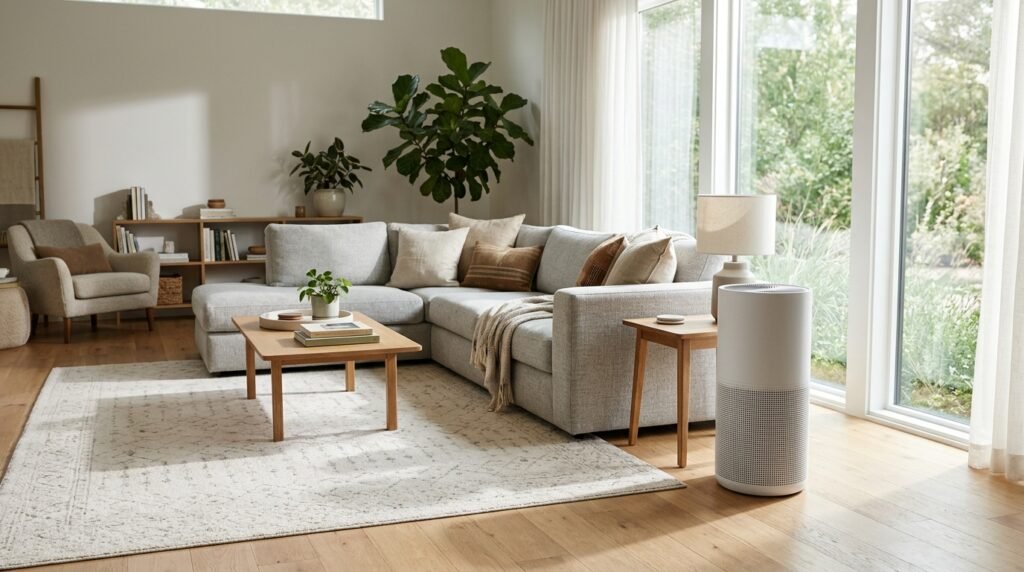
So, what size air purifier do I need for this room? Let’s use the rule from above. A living room that is 15 feet by 20 feet is 300 square feet. Two-thirds of 300 is 200, so you would look for a CADR of about 200 or higher. If your ceilings are higher than 8 feet, go a little higher.
Want to read more about how this works? The EPA explains how air cleaners and filters work in the home. If you also plan to link your purifier to a smart plug or a voice assistant, our beginner guide to what a smart home is is a good place to start.
Quick FAQ
Can one purifier handle my whole house? Usually not. Purifiers work on the room they are in, and a closed door makes a big difference.
Is a bigger purifier always better? Not always. A unit that is far too large costs more and may be unnecessary, but sizing up a bit is usually a safe choice.
Does an air purifier cure allergies or any medical condition? No. It can reduce airborne particles in a room, but it is not a medical treatment. If you have health concerns, talk to your doctor.
What size air purifier do I need for a small apartment? Measure the room you use most, such as the bedroom or living room, and use the two-thirds rule above. For rooms up to about 100 square feet, a CADR of roughly 65 or higher is a common starting point.
What size air purifier do I need? A quick recap
- The short rule: what size air purifier do I need for a typical bedroom? Find the floor area, take two-thirds of it, and look for that CADR or higher.
- For bigger rooms: what size air purifier do I need if the ceilings are high? Go one size up.
- Open spaces: what size air purifier do I need if the room opens into a hallway? Choose a higher CADR, or consider two units.
Final thoughts
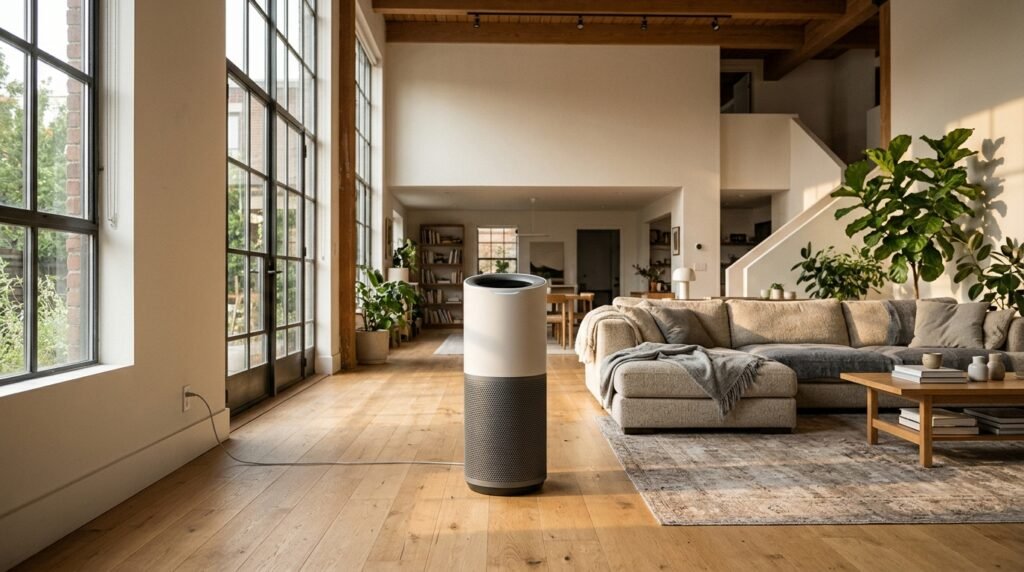
So, what size air purifier do I need for my home? Measure the room, find two-thirds of the square footage, and look for a CADR at or above that number. That one step will keep you from buying a purifier that looks impressive on the shelf but struggles in your actual room.
Related guides
- How Does a Robot Vacuum Work? A Beginner’s Guide
What Is a Smart Home? A Beginner’s Guide