

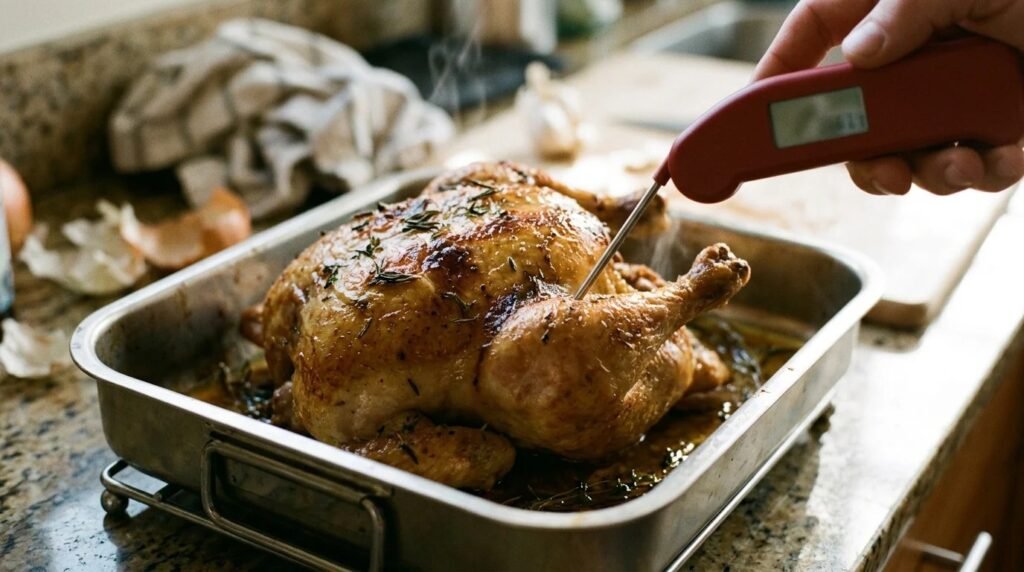
“Cook it until it’s done” is how most of us learned to cook. The trouble is that color is a terrible clue. Burgers can turn brown before they’re safe, and chicken can look perfect outside and still be undercooked inside. Knowing a handful of safe internal cooking temperatures, and owning a cheap thermometer, takes the guesswork out of every meal.
Contents
- 1Safe internal cooking temperatures: the chart
- 2How to use a food thermometer properly
- 3What does rest time mean?
- 4Which thermometer should you buy?
- 5Check your thermometer is accurate
- 6Holiday turkey tips
- 7Common mistakes we all make
- 8Quick FAQ
- 9Safe internal cooking temperatures: a quick recap
- 10Final thoughts
- 11Related guides
Here’s the chart we’d stick on the fridge.
Safe internal cooking temperatures: the chart
These numbers come from FoodSafety.gov, the U.S. government’s food safety site.
| Food | Safe minimum temperature | Rest time |
|---|---|---|
| Chicken and turkey (whole, pieces, ground) | 165°F (74°C) | None required |
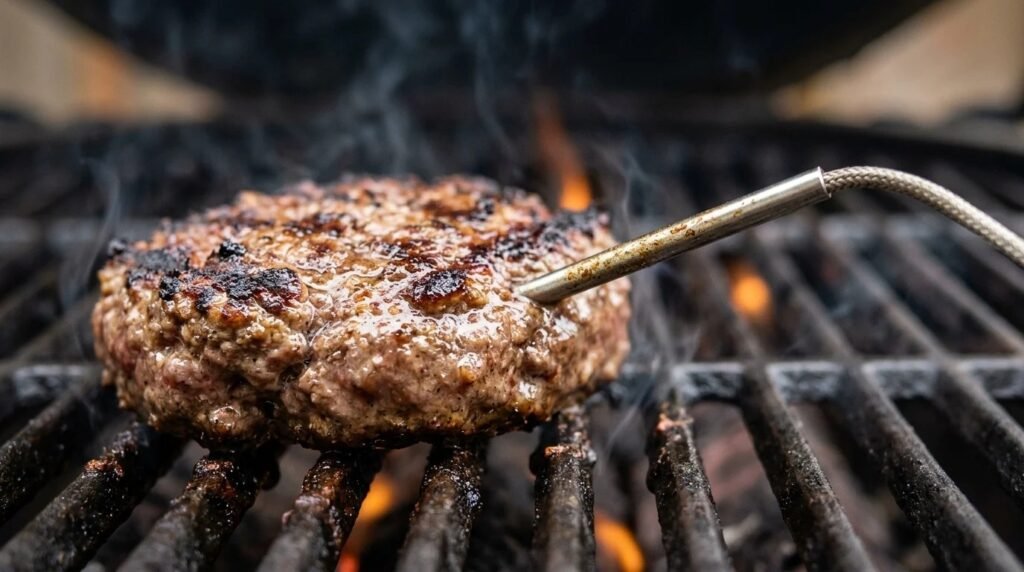
| Ground beef, pork, lamb and sausage | 160°F (71°C) | None required |
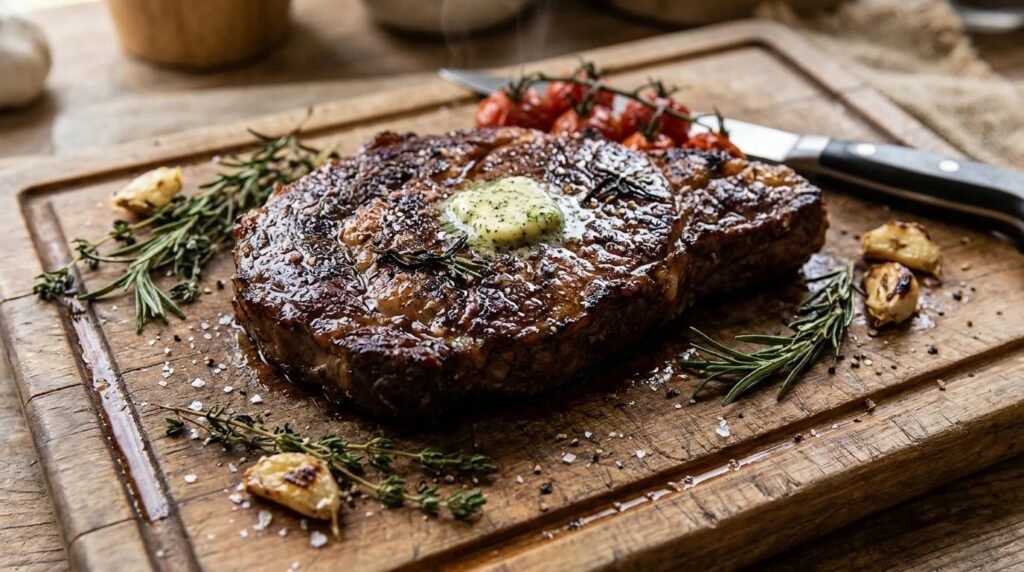
| Beef, pork, veal and lamb steaks, roasts and chops | 145°F (63°C) | 3 minutes |
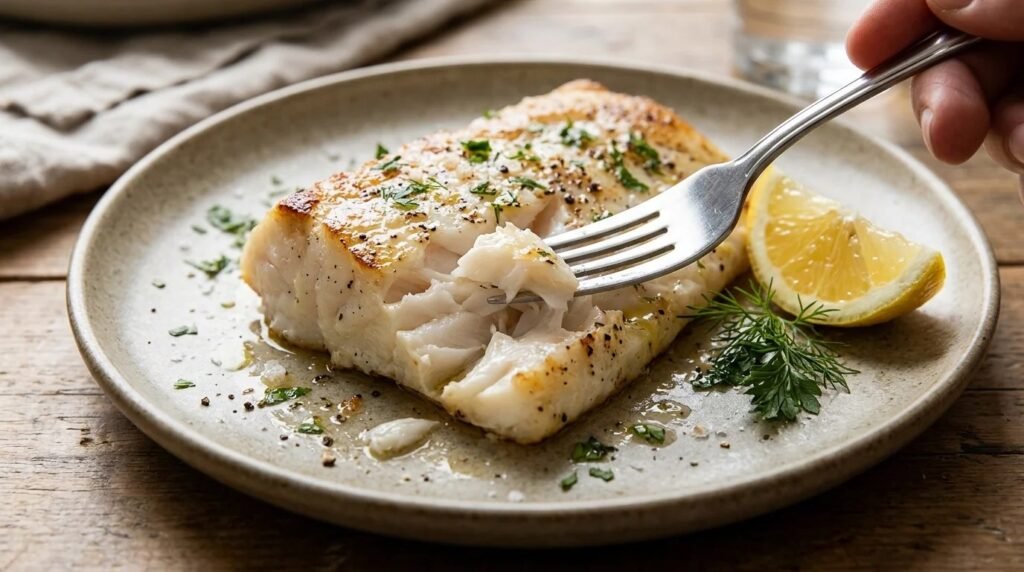
| Fish | 145°F (63°C) | Or until flesh is opaque and flakes with a fork |
| Egg dishes like quiche | 160°F (71°C) | None required |
| Leftovers and casseroles | 165°F (74°C) | None required |
How to use a food thermometer properly
- Insert into the thickest part. Avoid bone, fat and gristle, which can give false readings.
- Go in from the side for thin foods. Burgers and chicken breasts read more accurately from the side.
- Check a few spots. Especially for large roasts and whole birds.
- Wait for the number to settle. Instant-read models take a few seconds.
- Clean the probe between uses. Hot, soapy water after testing raw or partly cooked food.
What does rest time mean?
For steaks, roasts and chops, the temperature keeps rising a little after you take the meat off the heat. That three-minute rest is part of what makes 145°F safe for whole cuts. It also lets the juices settle, so your steak is juicier when you cut it. Ground meat is different because bacteria from the surface get mixed throughout, which is why it needs 160°F.
Which thermometer should you buy?
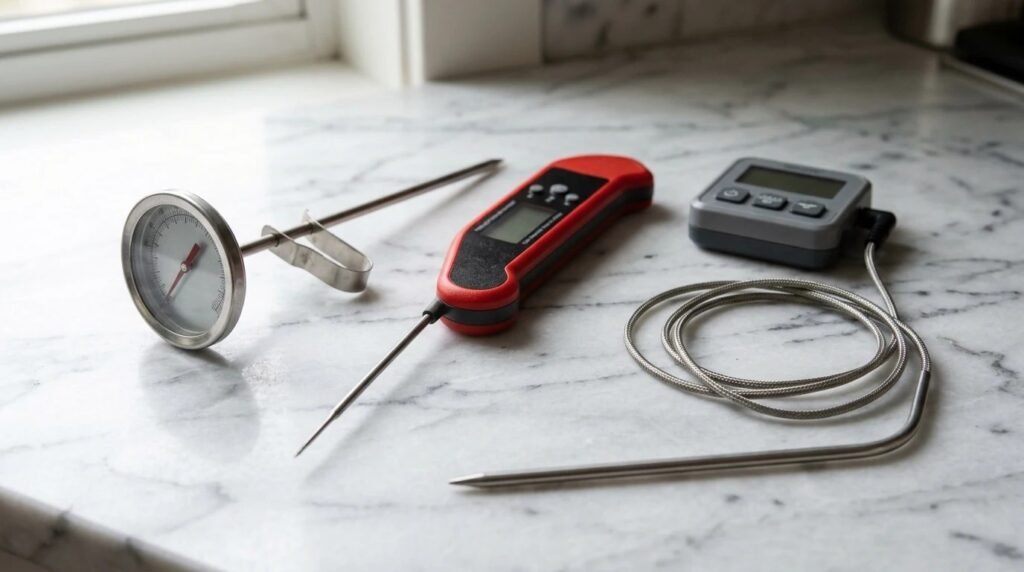
- Instant-read digital: fast, cheap and great for everyday cooking.
- Leave-in probe: stays in a roast or turkey with a display outside the oven.
- Smart wireless probe: sends the temperature to your phone. Handy for grilling and big holiday birds.
- Dial oven-safe: basic, but slower and harder to read.
Check your thermometer is accurate
Once in a while, test it in a glass of ice water (fully mixed with ice and a little water). It should read 32°F. If it’s off and your model can be calibrated, follow the instructions. If not, it might be time for a new one. They’re inexpensive, and an accurate one is worth much more than it costs.
Holiday turkey tips
The big bird is where a thermometer earns its keep. Check the innermost part of the thigh and wing and the thickest part of the breast; all of them should reach 165°F. If you cook stuffing inside the turkey, the stuffing in the center also needs to hit 165°F, which is why many cooks bake it in a separate dish instead. A leave-in probe with an outside display means you don’t have to keep opening the oven, which helps the turkey cook more evenly too.
Common mistakes we all make
Cutting into chicken to “check” it lets the juices run out and still doesn’t tell you the temperature. Trusting the pop-up timer in a turkey is another one; check the thigh and the thickest part of the breast with a real thermometer instead. And don’t forget leftovers: soups, casseroles and Thanksgiving dishes should all be reheated to 165°F.
Quick FAQ
Is pink chicken always unsafe? Color isn’t reliable. If it reached 165°F, it’s safe even with a little pink.
Can I eat a medium-rare steak? Whole cuts are considered safe at 145°F with a three-minute rest, according to FoodSafety.gov.
Where do I check a turkey? The innermost part of the thigh and wing and the thickest part of the breast.
Safe internal cooking temperatures: a quick recap
- 165°F: poultry and leftovers.
- 160°F: ground meat and egg dishes.
- 145°F + 3-minute rest: steaks, roasts, chops.
- 145°F: fish.
Final thoughts
Safe internal cooking temperatures are just six numbers, and a thermometer turns them into confidence. Heading into the holidays? Our guide to reheating Thanksgiving leftovers is a good next read.
Your turn: do you use a food thermometer, or do you cook by feel? Tell us in the comments. We’d love to hear both camps.
This chart is based on FoodSafety.gov guidance, not our own testing. Always follow current food safety recommendations.