

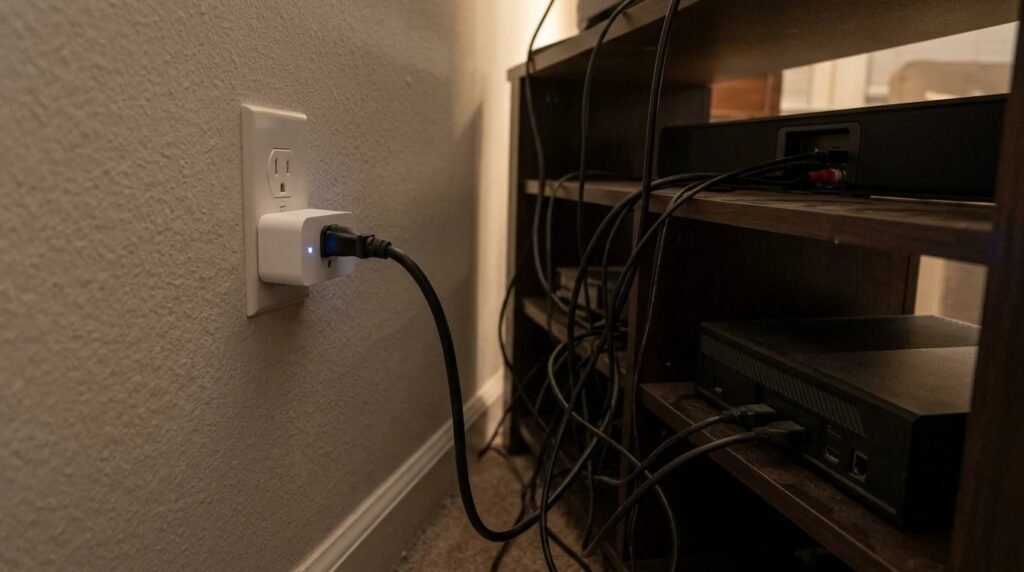
Do smart plugs save money? Yes, but only when they turn off something that would otherwise waste power, like a TV setup that sits on standby all night or a lamp that gets left on. Plug one into a device that’s already off when you’re not using it, and it saves next to nothing.
Contents
That’s the honest answer most ads skip. The good news is that a couple of plugs in the right spots can trim your bill a little every month, and the math is easy to check yourself.
Do smart plugs save money? The short answer
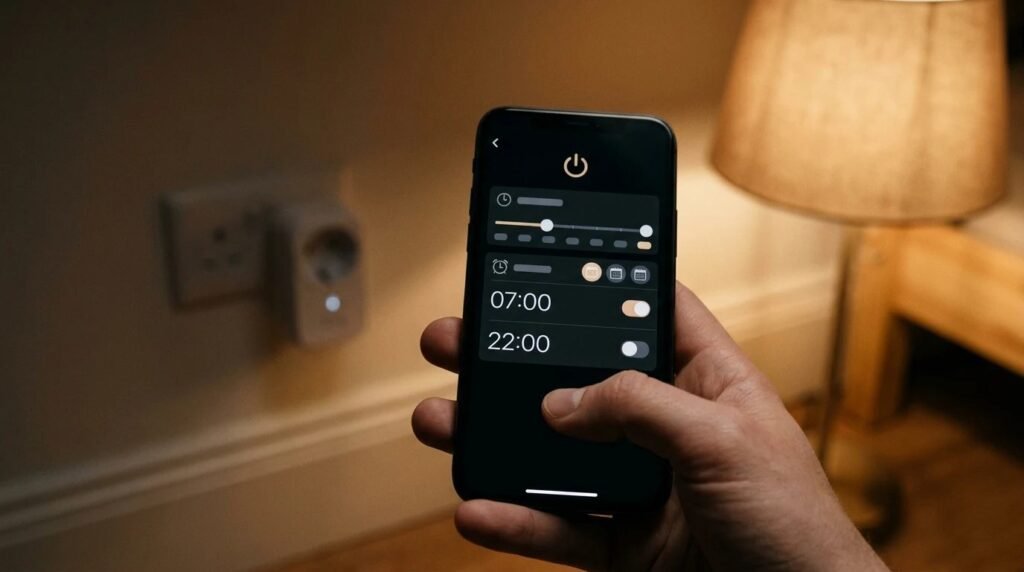
A smart plug saves money in two ways. First, it cuts standby power, the small trickle that TVs, consoles, speakers and chargers draw while “off.” Second, it stops forgotten devices from running for hours, thanks to schedules and remote control from your phone.
The savings are real but modest. The U.S. Department of Energy’s Energy Saver guide points to idle electronics as one of the easy places to cut waste, and that’s exactly where smart plugs shine.
The simple math (try it with your own numbers)
Here’s an example. Say your TV corner draws 10 watts on standby all day.
- 10 watts × 24 hours = 240 watt-hours, or 0.24 kWh a day.
- 0.24 kWh × 365 days = about 87.6 kWh a year.
- At an example rate of 17 cents per kWh, that’s about $14.90 a year.
If a smart plug cuts that setup off for 16 hours a day, you save roughly two-thirds of it, about $10 a year. Not life-changing, but a plug often pays for itself within a year or two. Check your own rate on your bill or on the EIA’s state price table, and remember the plug itself uses a little power too (we break that down in do smart plugs use electricity when off).
5 smart ways smart plugs help your bill
- Entertainment centers. TV, console, soundbar and streaming box on one power strip, switched off overnight by a schedule.
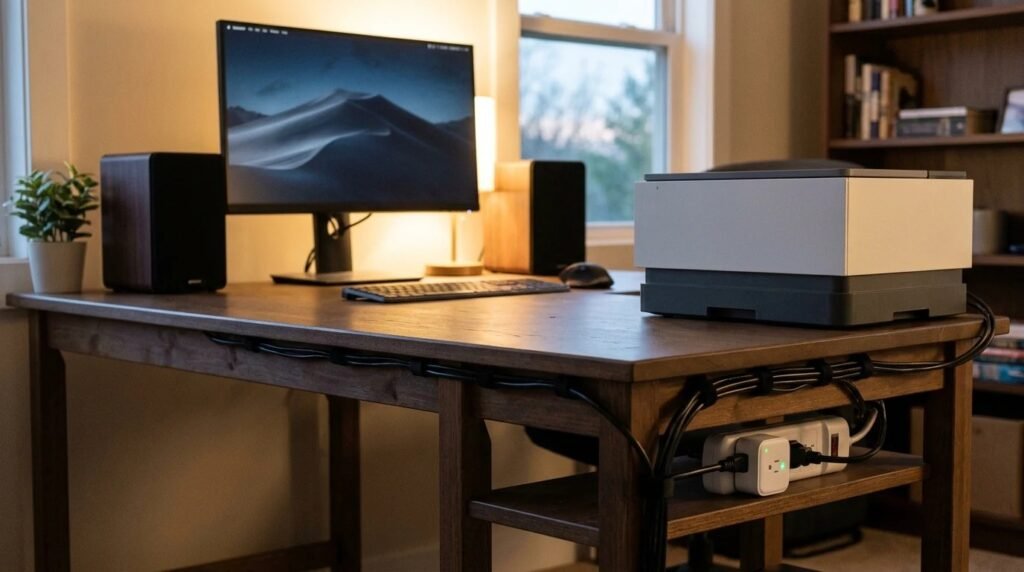
- Home office gear. Printers, monitors and speakers that don’t need to stay on after work hours.
- Lamps and holiday lights. Schedules mean nothing burns all night because someone forgot.
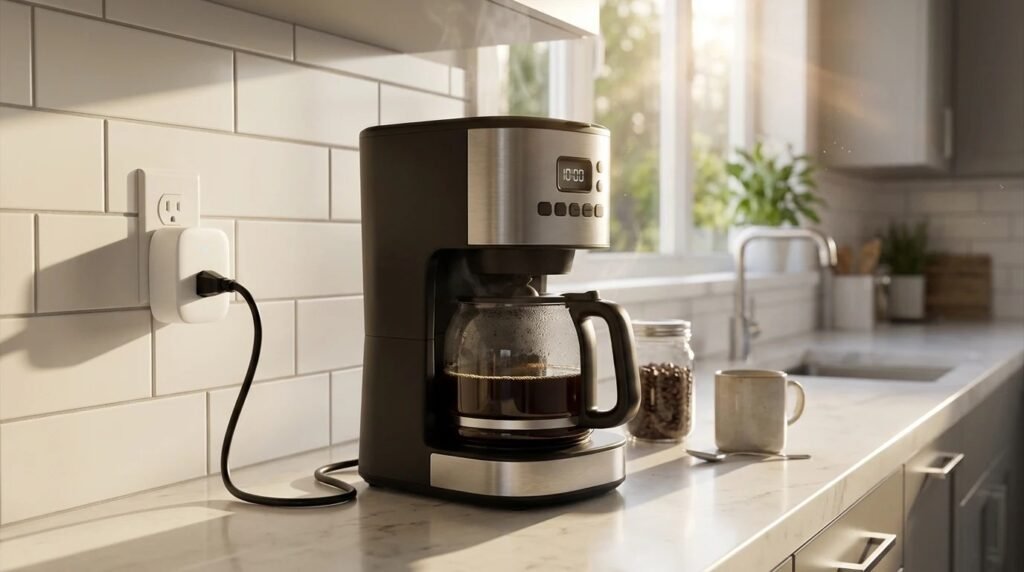
- Small kitchen appliances. A coffee maker with a warming plate can switch off after an hour automatically.
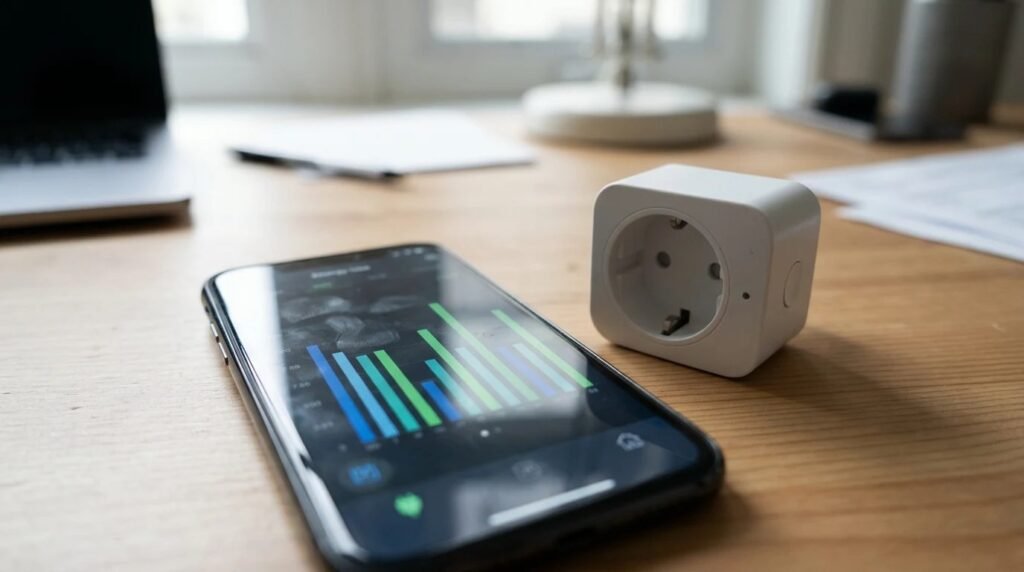
- Energy detective work. Plugs with energy monitoring show you which devices are the real power hogs, so you know where to act.
Where smart plugs won’t save you money
| Device | Will a smart plug help? | Why |
|---|---|---|
| — | — | — |
| TV and console setup | Yes | Cuts standby draw overnight |
| Lamps and string lights | Yes | Stops lights left on for hours |
| Phone chargers | A little | Idle chargers draw very little |
| Refrigerator | No | It needs constant power |
| Space heaters | Never use one | Heaters should plug straight into the wall |
| Wi-Fi router | Usually no | Cutting it breaks your smart home |
That last point is a safety rule, not a money tip. Space heaters and other high-power heating appliances should always plug directly into the wall. For more ideas on what’s safe, see what not to plug into a smart plug.
Quick FAQ
How much does a smart plug save per year? It depends on the device; a typical TV corner might save around $10 a year at an example 17-cent rate, more if your setup is older or your power is pricier. Do smart plugs use electricity themselves? Yes, a small amount to stay connected, so put them where they cut more than they use. Are smart plugs worth it just for savings? Usually not on savings alone; the convenience and schedules are the bigger win, and the savings are a bonus.
Do smart plugs save money? A quick recap
- Yes, in the right place: standby-heavy setups and things people forget to turn off.
- No, in the wrong place: fridges, routers and anything already switched off.
- Safety first: heaters always go straight into the wall.
Final thoughts
So, do smart plugs save money? A little, reliably, when you aim them at real waste. Start with your TV corner and a lamp, then check the numbers after a month. Our list of what you can do with a smart plug has more ideas.
Your turn: which device in your home do you suspect is the sneakiest power waster? Tell us in the comments.
This guide is based on research, official energy data and manufacturer information, not our own testing.
Related guides: Smart home on a budget · Smart home routines ideas · Are smart bulbs worth it?