
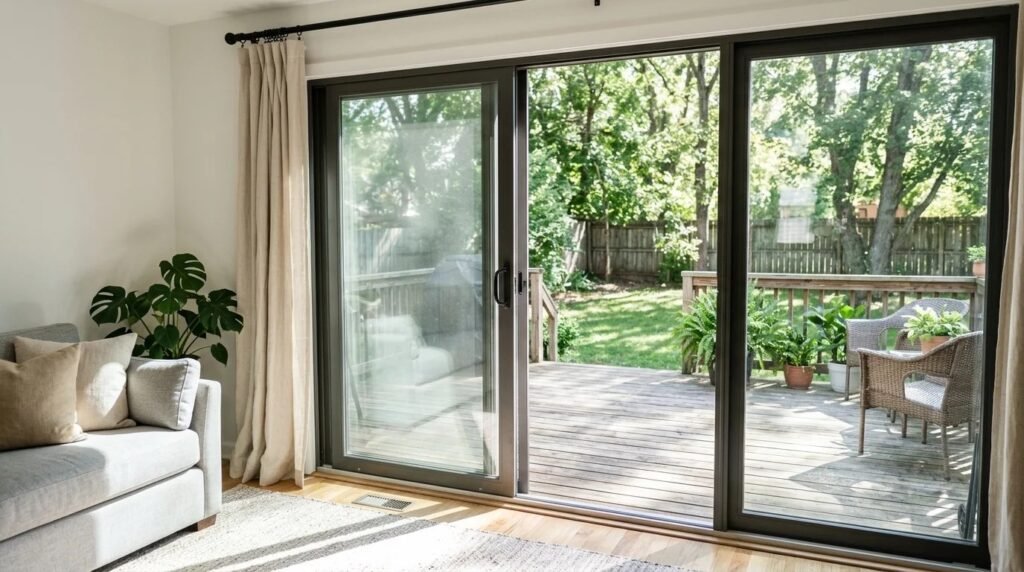
Sliding glass doors are lovely. All that light, easy access to the patio, a view of the backyard. They’re also one of the easier ways into a house if they’re not set up right, and many come with a latch that’s more suggestion than lock. The good news: knowing how to secure a sliding glass door mostly means a few cheap fixes you can do on a Saturday.
Contents
Here’s what police departments recommend, plus a few modern extras.
How to secure a sliding glass door: the short answer
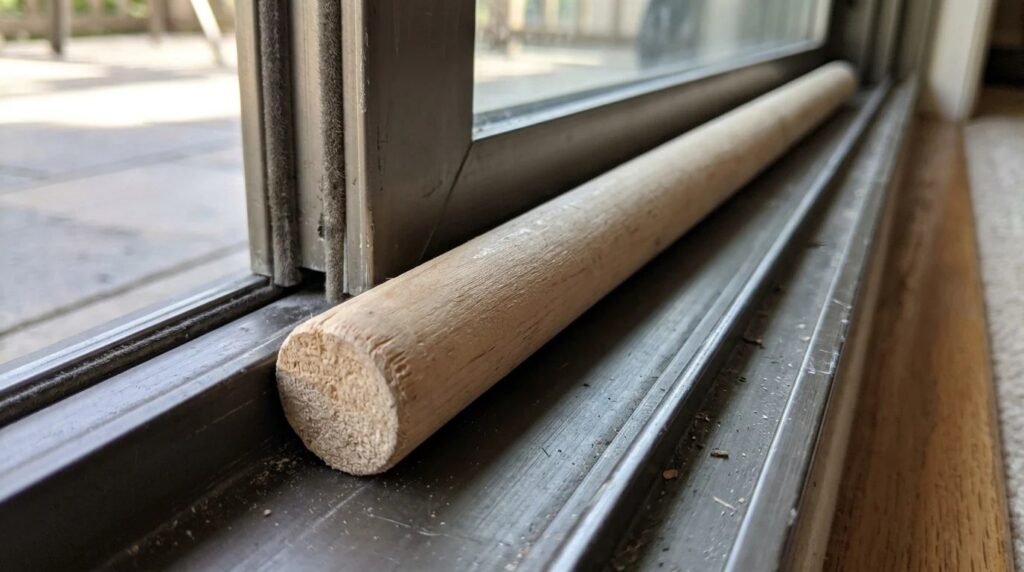
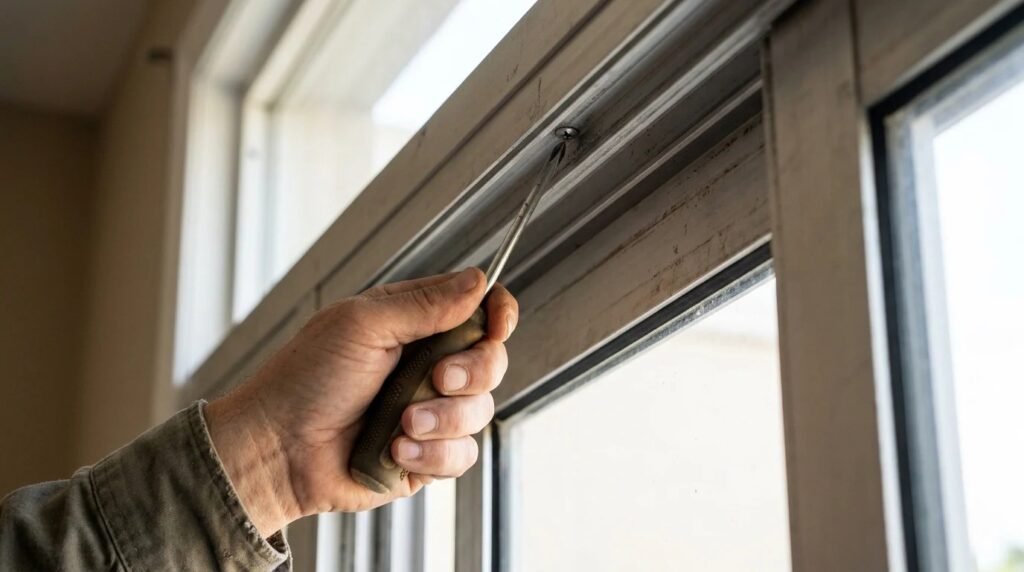
Put a bar or dowel in the bottom track so the door can’t slide open, add screws in the upper track so the door can’t be lifted out, and consider an auxiliary patio door lock. The Weatherford, Texas police notes that many burglars enter through poorly protected sliding doors and recommends screws in the upper track to stop the door from being lifted out.
Why sliding doors are a weak spot
Many sliding doors use a simple hook latch that can sometimes be forced or jiggled. Older doors can also be lifted off their tracks from outside if there’s enough gap at the top. And because they’re often at the back of the house, out of view from the street, someone can work on them without being noticed.
7 easy, cheap fixes
- Bar in the track. A cut wooden dowel or an adjustable security bar stops the door from sliding.
- Anti-lift screws. Screws in the upper track, adjusted so the door just clears them, stop it from being lifted out.
- Auxiliary patio lock. A foot lock or loop lock adds a second, stronger lock.
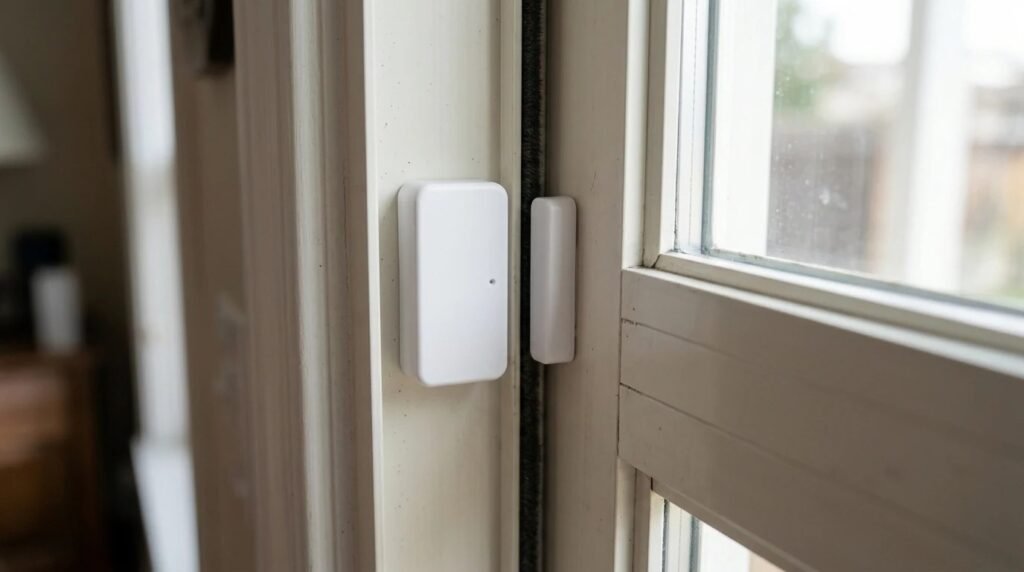
- Door or glass-break sensor. Many smart security systems include contact sensors that alert your phone.
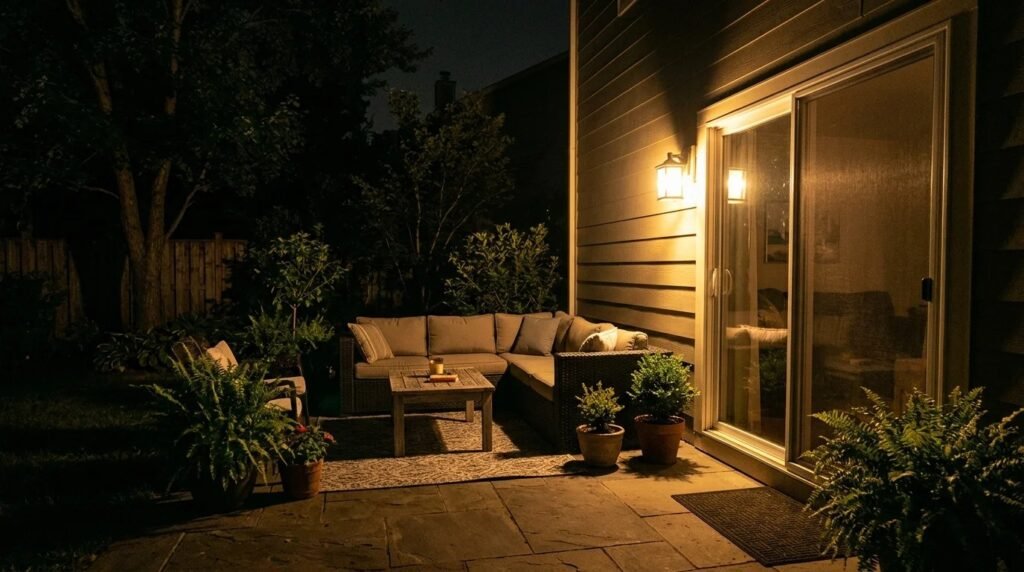
- Motion light outside. See outdoor lighting for home security.
- Security film. Makes glass harder to break through quickly.
- Curtains at night. Don’t let passersby see in.
Cost and effort
| Fix | Cost | Time |
|---|---|---|
| Dowel in the track | A few dollars | 10 minutes |
| Adjustable security bar | Low | 5 minutes |
| Anti-lift screws | A few dollars | 20 minutes |
| Auxiliary patio lock | Low to medium | 30 minutes |
| Contact sensor | Low to medium | 10 minutes |
Habits matter too
The fanciest bar in the world won’t help if the door is left unlocked. Make checking the sliding door part of your bedtime routine, the same way you check the front door. Don’t leave it open a crack for the dog while you run to the store. Keep valuables out of view from the patio, and put away ladders and tools that someone could use. If you lose track of whether it’s locked, a cheap contact sensor gives you peace of mind from your phone.
Don’t block your escape route
A sliding door is often a second way out in a fire. Whatever you add, make sure every adult and older child can remove the bar or open the extra lock quickly, even in the dark. Avoid anything that needs a key from inside. Security should keep people out, not trap anyone in.
Smart upgrades worth considering
If you have a smart home, a contact sensor on the sliding door can tell you if it was left open or unlocked when you go to bed. Pair it with a camera that covers the backyard; our guide to video doorbells vs security cameras helps you choose. And keep the camera app secure with a strong password.
Quick FAQ
Does a broomstick in the track work? It works on the same idea as a security bar, as long as it fits snugly and is cut to length.
Can a sliding door be lifted off its track? Some older doors can. Screws in the upper track help prevent that.
Should I replace an old sliding door? If it’s damaged, drafty or won’t lock properly, a newer door with better locks may be worth it.
How to secure a sliding glass door: a quick recap
- Stop sliding: bar or dowel in the track.
- Stop lifting: screws in the upper track.
- Add layers: extra lock, sensor, lighting.
- Stay safe: keep it easy to open from inside.
Final thoughts
Now you know how to secure a sliding glass door, a few dollars and an afternoon make a big difference. While you’re at it, check the tips in how to make your front door more secure.
Your turn: do you have a stick in your sliding door track? Many of us grew up with one. Tell us in the comments what your setup looks like.
This guide uses police department crime prevention advice, not our own testing. Follow local fire codes for exits.