
Every freezer has a mystery package at the back. Maybe it’s chicken, maybe it’s last year’s chili, and nobody knows how long it’s been there. If you’ve ever wondered how long can you freeze food before it’s no good, the answer is a little surprising: it stays safe a lot longer than it stays tasty.
Contents
Here’s a simple chart and the habits that keep your freezer under control.
How long can you freeze food: the short answer
According to FoodSafety.gov, food kept continuously frozen at 0°F or below can be kept indefinitely. The time limits you see on charts are about quality: flavor, texture and freezer burn. So that two-year-old steak won’t make you sick if it stayed frozen, but it may taste like the freezer.
Freezer chart for best quality
| Food | Freezer time (best quality) |
|---|---|
| Raw ground meat | 3 to 4 months |
| Steaks, chops and roasts | 4 to 12 months |
| Whole chicken or turkey | 1 year |
| Chicken or turkey pieces | 9 months |
| Bacon | 1 month |
| Hot dogs | 1 to 2 months |
| Cooked meat or poultry | 2 to 6 months |
| Soups and stews | 2 to 3 months |
| Pizza | 1 to 2 months |
| Lean fish / fatty fish | 4 to 8 months / 2 to 3 months |
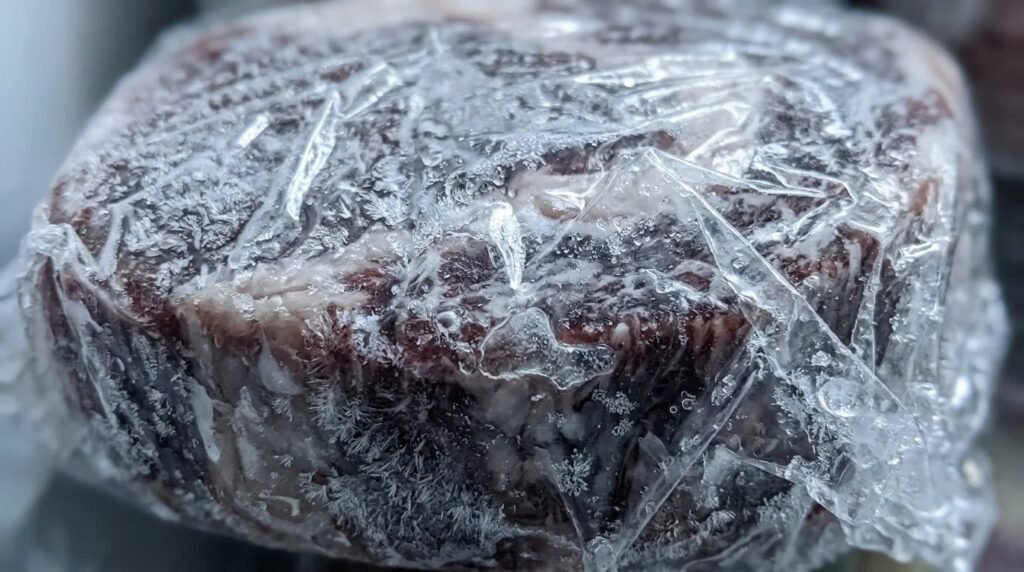
What is freezer burn?
Freezer burn is the dry, grayish patches you sometimes see on frozen food. It happens when air reaches the surface and moisture escapes. It isn’t a safety problem, but it does make food dry and bland. You can cut off the worst bits before or after cooking. The real fix is better wrapping.
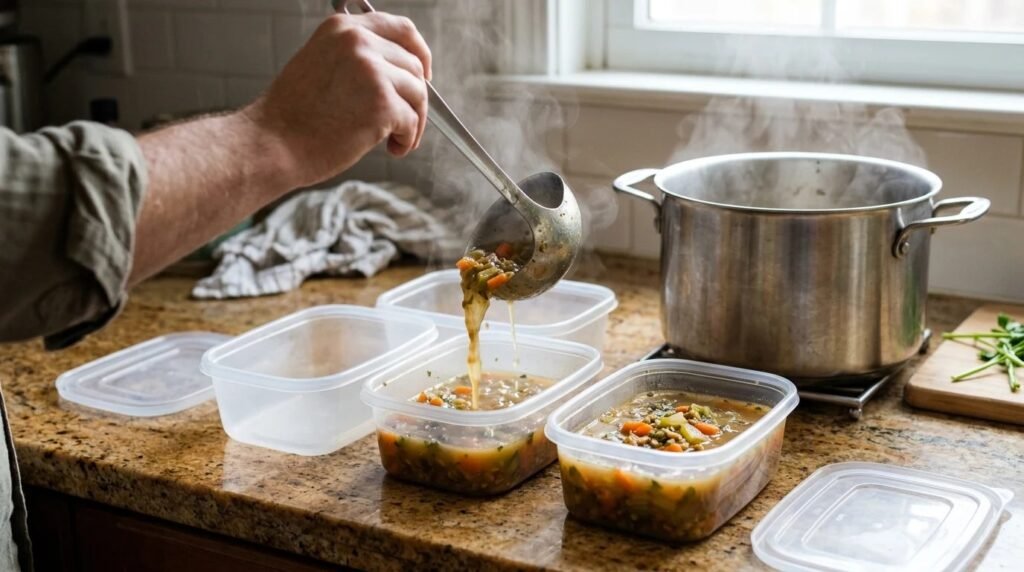
8 simple freezer tips
- Keep it at 0°F. An appliance thermometer will tell you. See fridge and freezer temperature settings.
- Squeeze out the air. Air is what causes freezer burn.
- Use freezer-grade bags or containers. Thin bags let air in.
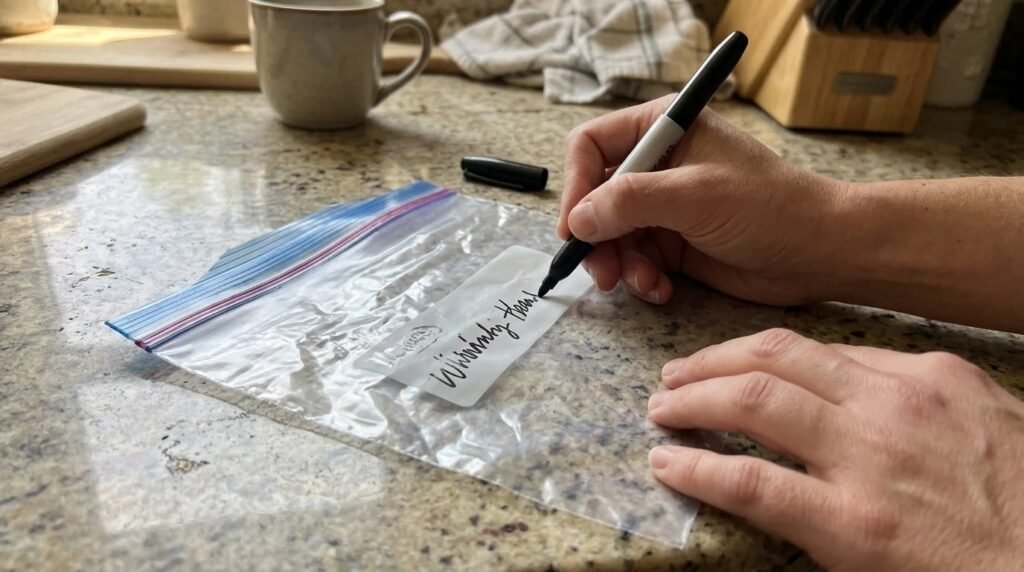
- Label and date everything. Future you will be grateful.
- Freeze flat. Flat bags freeze faster, stack neatly and thaw quicker.
- Cool food first, but get it in the fridge or freezer within two hours.
- First in, first out. Move older food to the front.
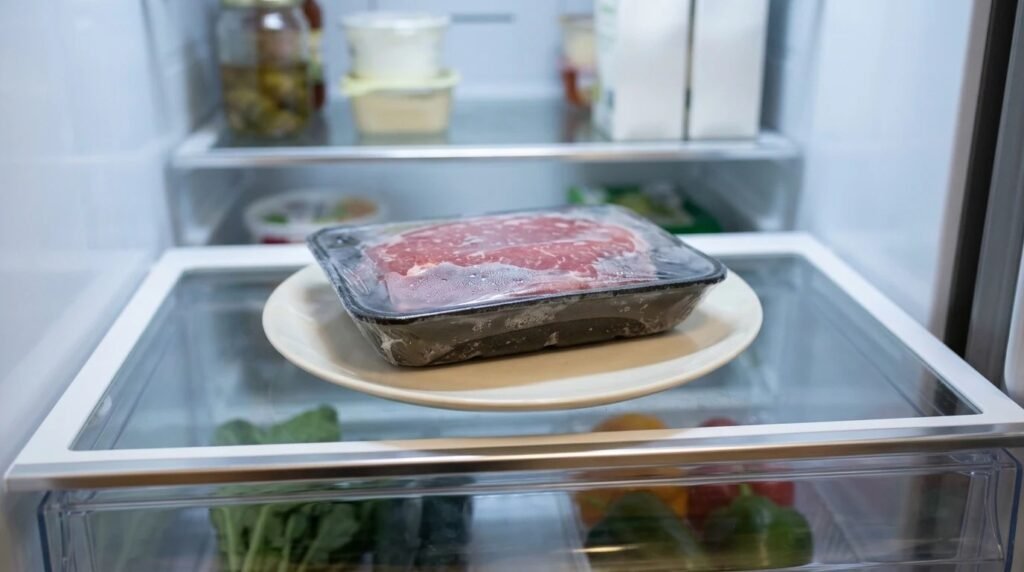
- Thaw safely. In the fridge, in cold water or in the microwave, not on the counter.
Foods that don’t freeze well
Not everything loves the freezer. Lettuce and cucumbers turn limp and watery. Mayonnaise and cream-based sauces can separate. Raw eggs in the shell can crack; beat them first if you want to freeze them. Cooked pasta and potatoes can get mushy in soups, so many cooks freeze the soup base and add them fresh. These foods are still safe after freezing, they just won’t be as nice, so plan around them.
Batch cooking made easy
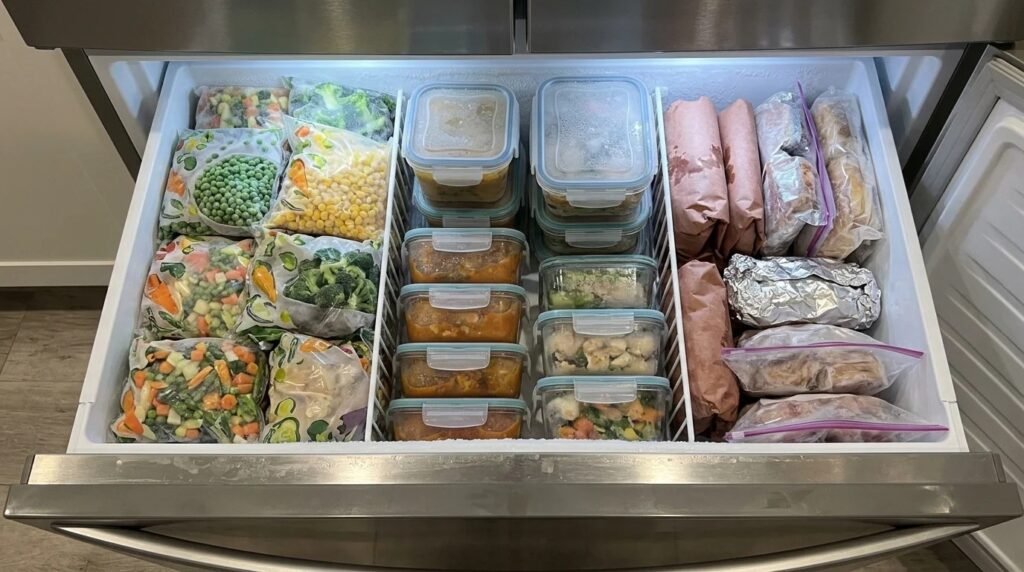
If you cook big batches on weekends, portion meals into single or family-size containers before freezing. Label them with the name and date, freeze them flat and keep a simple list on the fridge door of what’s inside. It turns a full freezer into a menu instead of a mystery.
What about a power outage?
A full freezer keeps food safe for about 48 hours if you keep the door closed, according to the FDA and CDC. Half full, about 24 hours. Food that still has ice crystals or is at 40°F or below can usually be refrozen, though quality may suffer. More in what to do during a power outage.
Quick FAQ
Is it safe to eat food frozen for a year? If it stayed frozen at 0°F the whole time, it’s safe. Quality is the question.
Can I refreeze thawed meat? Food thawed in the refrigerator can be refrozen, though it may lose some quality.
Does freezing kill bacteria? No. Freezing stops bacteria from growing, but they can become active again once food thaws.
How long can you freeze food: a quick recap
- Safety: indefinitely at a steady 0°F.
- Quality: follow the chart, from 1 month (bacon) to 1 year (whole poultry).
- Prevent freezer burn: remove air and use good packaging.
- Thaw in the fridge, never on the counter.
Final thoughts
Now you know how long can you freeze food, take ten minutes this weekend to sort your freezer, label everything and move the oldest items to the front. Planning to freeze holiday extras? Our Thanksgiving leftovers guide has tips.
Your turn: what’s the oldest thing in your freezer right now? Be brave and tell us in the comments.
This guide uses FoodSafety.gov, FDA and CDC guidance, not our own testing.