


You wash your sheets regularly (we hope!), but when did you last clean the mattress underneath? We spend about a third of our lives on it, and over time it collects dust, dead skin, sweat and the occasional spilled coffee. Knowing how to clean a mattress at home freshens your bed and can help if dust bothers you.
Contents
You don’t need special machines. A vacuum, baking soda and a bit of patience do most of the work.

How to clean a mattress: the short answer
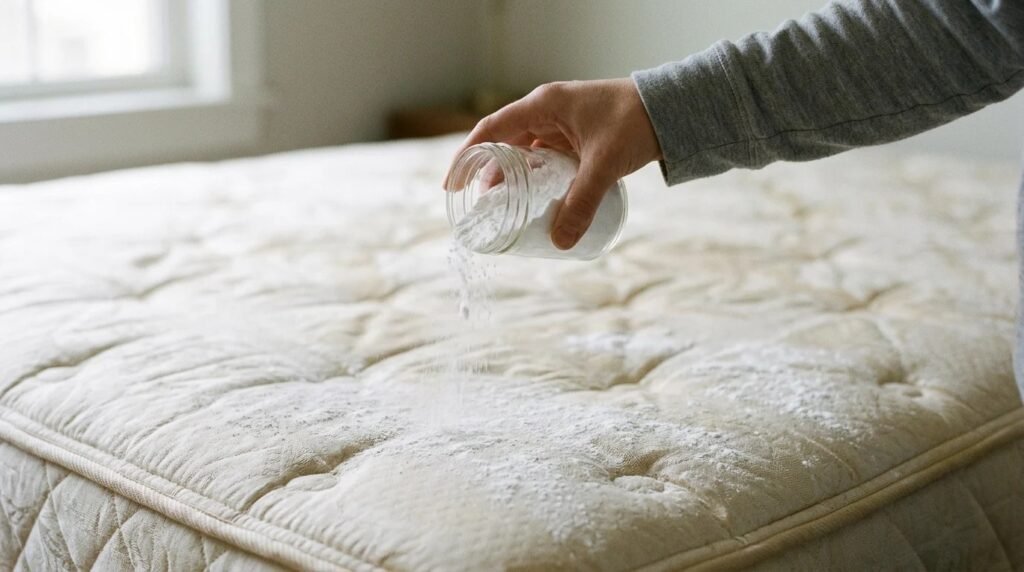
Strip the bed and wash the bedding in hot water if the care labels allow. Vacuum the mattress slowly with an upholstery tool. Spot-clean any stains with a little mild detergent and cool water, blotting rather than scrubbing. Sprinkle baking soda over the surface, leave it for several hours, then vacuum it up. Let it air out, then add a washable protector.
7 easy steps
- Strip and wash everything. Sheets, pillowcases, mattress pad and protector.
- Check the label. Your mattress tag or the maker’s website will list cleaning do’s and don’ts.
- Vacuum slowly. Top, sides and seams. Use a clean upholstery tool.
- Spot-clean stains. Mix a little mild detergent in cool water, dab with a cloth and blot. Use as little liquid as possible.
- Deodorize. Sprinkle a thin layer of baking soda and leave it for several hours, ideally with sun coming in.
- Vacuum again. Remove all the baking soda.
- Dry completely. Open windows or run a fan before remaking the bed.
Common stains and what to try
| Stain | Try | Avoid |
|---|---|---|
| Sweat or yellowing | Mild detergent solution, blot | Soaking the mattress |
| Coffee or juice | Blot quickly, then mild detergent | Hot water, which can set stains |
| Blood | Cold water and a little mild detergent | Hot water |
| Pet accidents | An enzyme cleaner made for fabrics | Strong scented sprays |

The big rule: don’t soak it
Moisture is the enemy of mattresses, especially foam and hybrid models. Too much liquid can seep into the layers and lead to musty smells or mildew. The EPA advises drying wet materials quickly to prevent mold. So use a damp cloth, not a wet one, and make sure the mattress is fully dry before you put sheets back on.
Help for allergy sufferers
If dust bothers you, mattress and pillow covers that block dust mites can help. The Alabama Department of Public Health recommends these covers along with HEPA vacuums and keeping indoor humidity below 60 percent. Our guide to ideal indoor humidity explains how to measure and manage it.

Don’t forget the pillows and bed frame
While the bed is stripped, give the rest of it some love too. Many pillows can go in the washing machine; check the care label and dry them fully so they don’t get musty inside. Vacuum the bed frame, headboard and the floor underneath, where dust bunnies love to hide. If you have a box spring, vacuum that as well. It only adds ten minutes, and the whole bed will feel noticeably fresher.
How often should you clean a mattress?
A good rhythm is a vacuum every month or two and a deeper clean with baking soda every few months, or with the change of seasons. If your mattress can be rotated, do it while it’s bare; many makers suggest rotating every few months so it wears evenly. Spot-clean spills as soon as they happen.
Quick FAQ
Can I steam clean a mattress? Some makers allow it and some don’t. Check your mattress instructions, since heat and moisture can damage some foams.
Does baking soda really work? It’s a popular, gentle way to absorb odors. Vacuum it up thoroughly afterward.
Do I need a mattress protector? It’s the easiest way to keep a mattress clean. Most are machine washable.
How to clean a mattress: a quick recap
- Vacuum top, sides and seams.
- Spot-clean with a little mild detergent; blot, don’t scrub.
- Deodorize with baking soda, then vacuum.
- Protect it with a washable cover.
Final thoughts
Now you know how to clean a mattress, pick a sunny weekend morning, open the windows and give your bed a fresh start. Your sleep will feel better for it.
Your turn: have you ever cleaned your mattress? Be honest; tell us in the comments and share any stain-busting tricks that worked.
This guide uses common cleaning advice and public health guidance, not our own testing. Follow your mattress maker’s care instructions.