


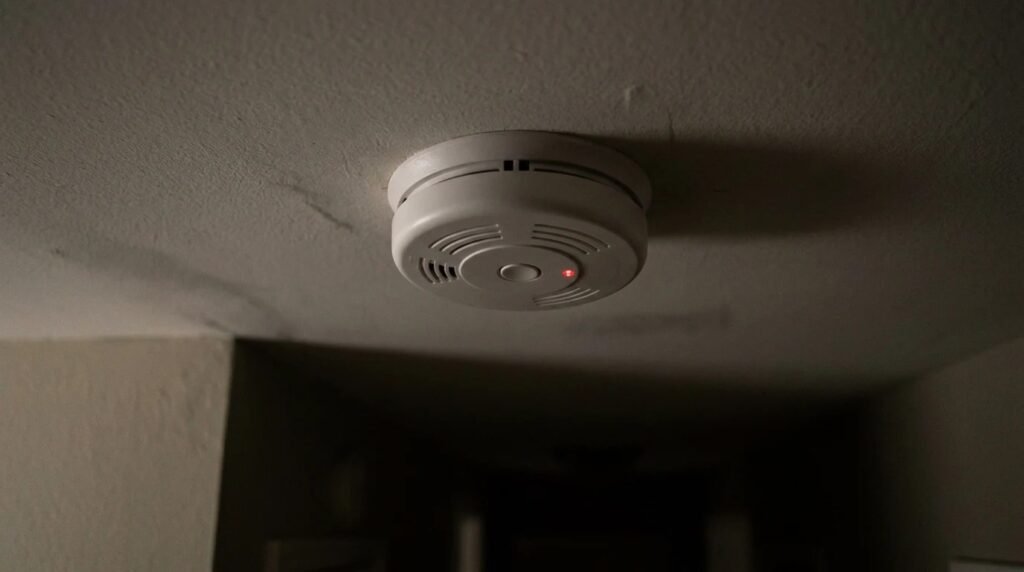
It always seems to start at 3 a.m. One tiny chirp. Then, just when you’ve convinced yourself you imagined it, another one. A smoke detector chirping is one of the most annoying sounds in any home, but it’s also your alarm trying to tell you something useful. The fix is usually quick.
Contents
Here’s what the chirp means and how to make it stop, safely.
Why is my smoke detector chirping?
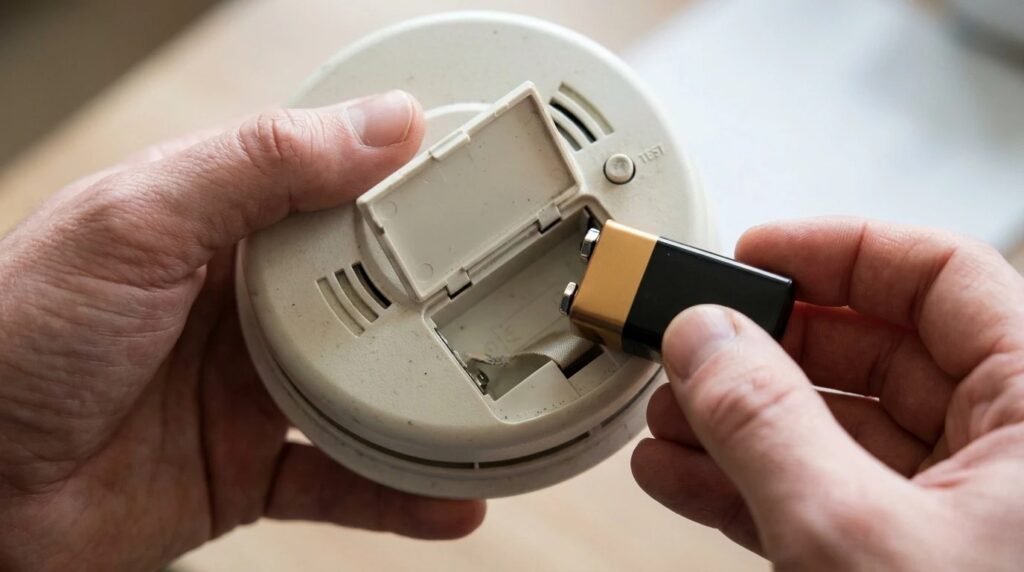
Most of the time it’s a low battery. Kidde says its smoke alarms chirp every 30 to 40 seconds (every 60 seconds on some models) for at least seven days when the battery is low. On alarms with sealed batteries, a chirp every 30 seconds usually means the whole alarm has reached the end of its life and needs replacing.
Why it happens at night
A common explanation is temperature. Many homes get cooler at night, and a weak battery’s voltage can drop as it cools, pushing it below the alarm’s low-battery threshold. In the warmer daytime, it may recover just enough to stop chirping. So the 3 a.m. chirp isn’t a conspiracy; it’s physics.
6 easy fixes
- Find the right alarm. Chirps bounce around. Stand under each one and wait.
- Replace the battery. Use the type listed on the alarm, then press test.
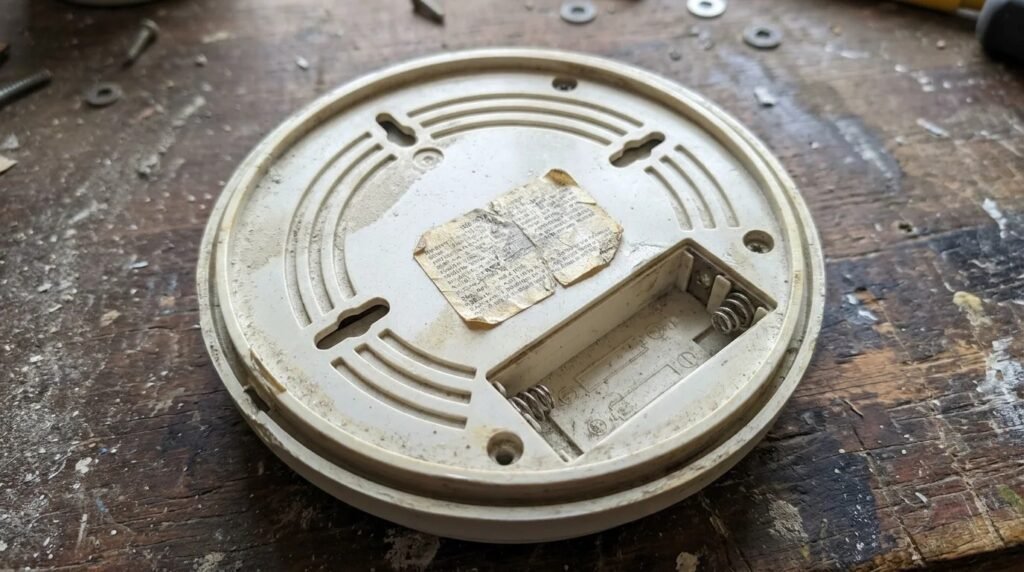
- Check the date. The manufacture date is on the back. The U.S. Fire Administration says to replace alarms 10 years after that date.
- Close the battery door fully. A loose drawer or contact can cause chirping.
- Clean it gently. Dust can affect sensors; follow the maker’s cleaning advice.
- Check hardwired alarms’ backup batteries. Hardwired alarms have backup batteries too.
Chirp patterns at a glance
| What you hear | Likely meaning | What to do |
|---|---|---|
| Chirp every 30 to 60 seconds | Low battery | Replace the battery |
| Chirp every 30 seconds, sealed alarm | End of life | Replace the whole alarm |
| Chirp after a new battery | Battery not seated, or alarm faulty | Reseat, test, or replace |
| Loud continuous alarm | Smoke or fire detected | Get out and call 911 |
Make battery day a habit
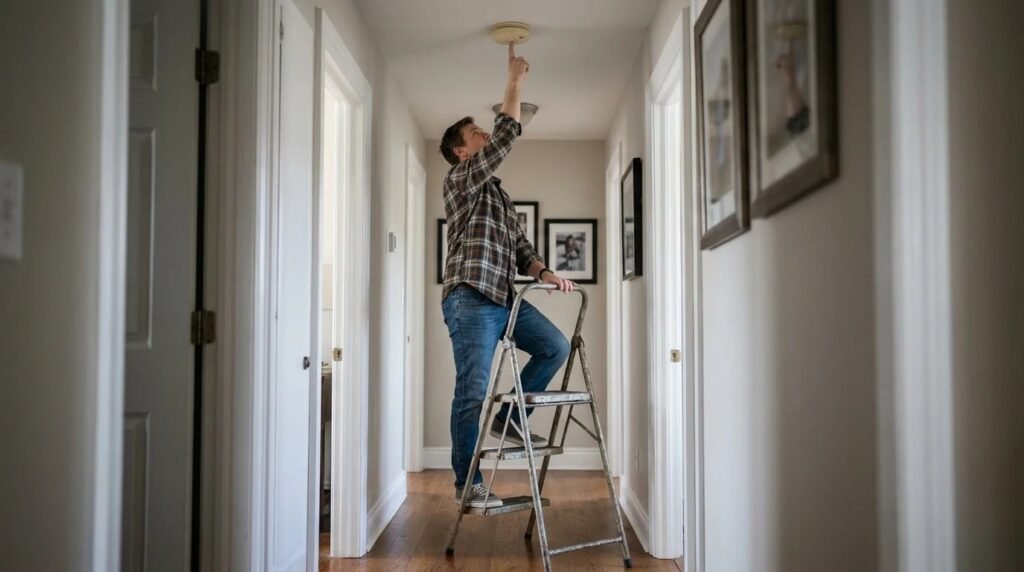
The easiest way to avoid 3 a.m. chirps is to replace batteries on a schedule before they run low. Pick a date you’ll remember, like a birthday or the start of daylight saving time, and do every alarm in the house at once. Write the date on the battery with a marker. And when you’re shopping for new alarms, sealed 10-year battery models mean no battery swaps at all; you just replace the whole alarm when it reaches the end of its life.
Don’t just pull the battery
It’s tempting to rip the battery out at 3 a.m. and deal with it later. Please don’t leave it that way. A disabled smoke alarm is the most dangerous kind. If you don’t have a spare battery, put it on tomorrow’s list and replace it first thing. Better yet, keep a pack of the right batteries in a drawer.
Is it a carbon monoxide alarm instead?
CO alarms chirp too. Kidde says its CO alarms chirp once every 60 seconds for a low battery and every 30 seconds for end of life or a malfunction. A loud, repeating pattern of beeps is different; it can mean carbon monoxide is present. Get everyone outside and call 911. See where to put a carbon monoxide detector.
Quick FAQ
Why does my smoke detector chirp after changing the battery? The battery may not be seated, the door may not be closed, or the alarm may be at the end of its life.
How often should I change smoke alarm batteries? The U.S. Fire Administration says at least once a year for replaceable batteries.
Can I stop the chirp without replacing the battery? Not safely. The chirp is a warning that the alarm needs attention.
Smoke detector chirping: a quick recap
- Most common cause: low battery.
- Sealed alarms: chirping can mean replace the whole unit.
- Replace alarms 10 years after the manufacture date.
- Never leave an alarm without a battery.
Final thoughts
A smoke detector chirping is annoying, but it’s a five-minute fix. While the step stool is out, check the rest of your alarms and read where to put smoke alarms to see if you’re missing any.
Your turn: what time did your smoke detector last start chirping? We’re betting it was the middle of the night. Tell us in the comments.
This guide uses Kidde and U.S. Fire Administration guidance, not our own testing. Follow your alarm’s manual.