

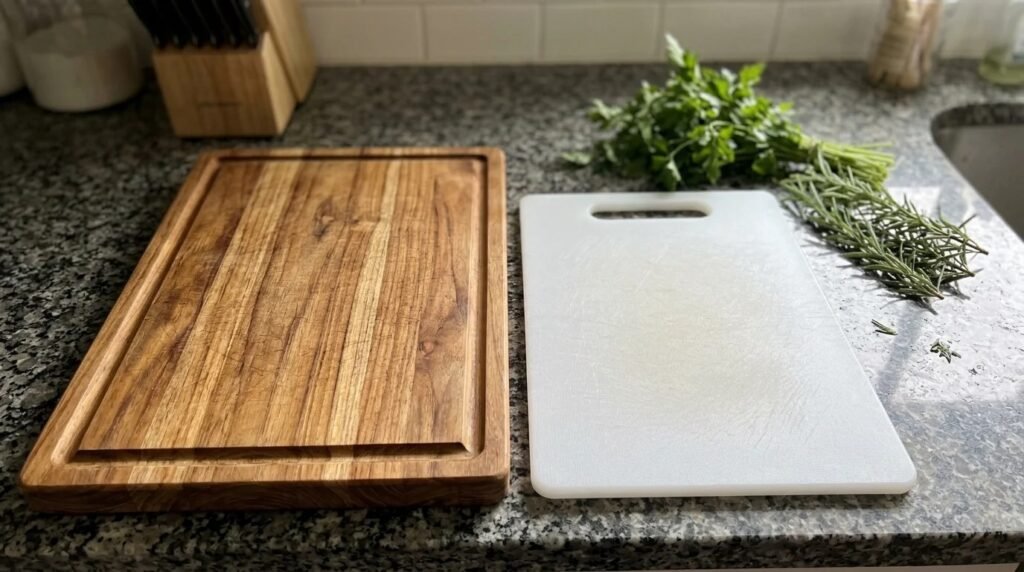
Some cooks swear by their big wooden board. Others won’t touch anything but plastic because it goes in the dishwasher. Both camps have a point. The wood vs plastic cutting board debate isn’t about which is “best” overall; it’s about using the right board for the right job and keeping it clean.
Contents
- 1Wood vs plastic cutting board: the short answer
- 2How they compare
- 37 simple facts for safe prep
- 4A simple cleaning routine
- 5Cross-contamination traps to avoid
- 6What about bamboo and glass?
- 7Keep your board from sliding
- 8Quick FAQ
- 9Wood vs plastic cutting board: a quick recap
- 10Final thoughts
- 11Related guides
Here’s what food safety experts actually recommend.
Wood vs plastic cutting board: the short answer
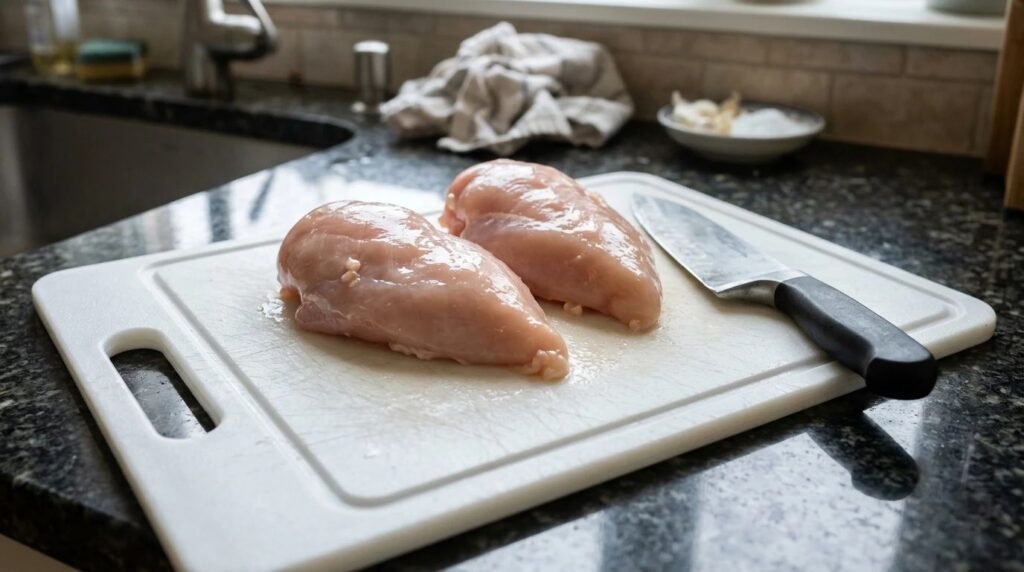
Use one board for raw meat, poultry and seafood, and a separate one for ready-to-eat foods like bread and produce. The University of Maine Cooperative Extension says plastic boards are excellent for raw meat and seafood because they can be sanitized thoroughly, while wood can absorb moisture and bacteria if it isn’t properly maintained. Many home cooks keep a plastic board for raw meat and a wooden one for everything else.
How they compare
| Feature | Wood | Plastic |
|---|---|---|
| Raw meat and seafood | Harder to sanitize | Great choice |
| Dishwasher | Usually not; may warp | Usually yes |
| Knife friendliness | Gentler on edges | Fine, but scratches easily |
| Care | Oil about monthly | Replace when deeply grooved |
| Looks | Beautiful, lasts years | Practical, cheap to replace |
7 simple facts for safe prep
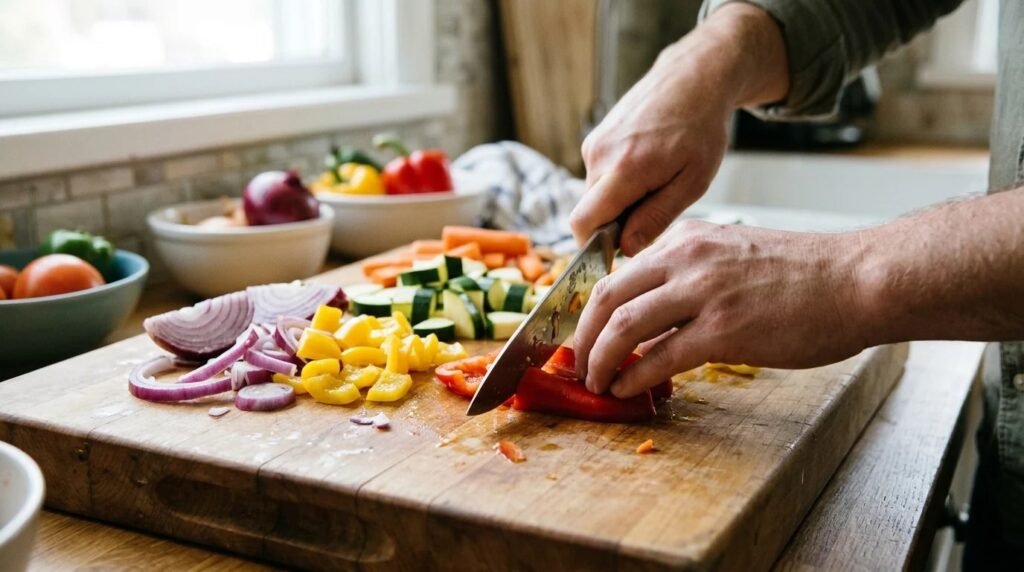
- Two boards minimum. One for raw animal foods, one for ready-to-eat foods.
- Wash after every use. Warm water and dish soap, then rinse and dry.
- Sanitize now and then. UMaine suggests 1/2 tablespoon of unscented bleach per gallon of water, soaking no more than 2 minutes, then rinsing and drying.
- Dry fully. Stand boards up so air reaches both sides.
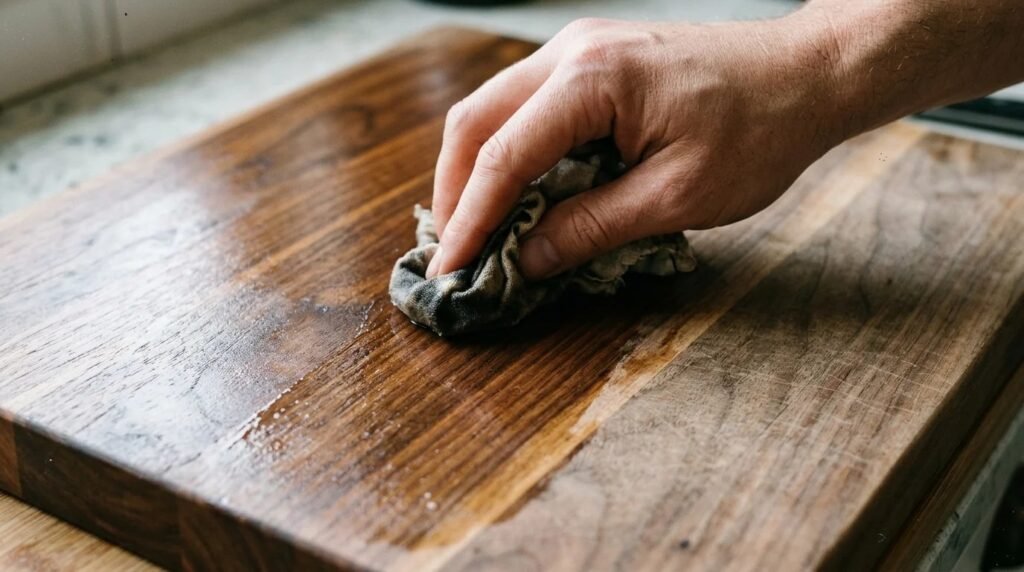
- Oil wooden boards. Food-safe mineral oil or beeswax about once a month; avoid cooking oils, which can turn rancid.
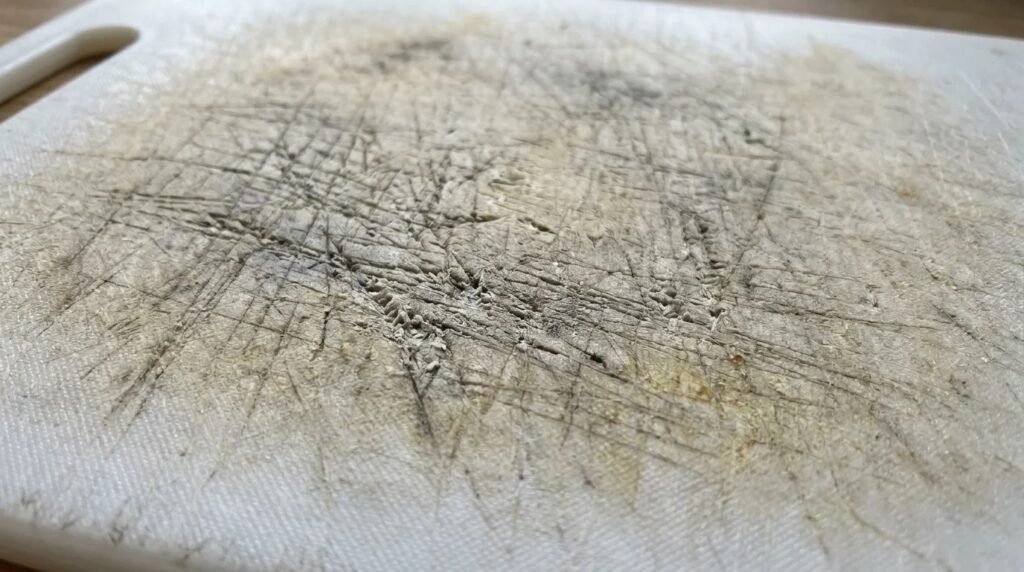
- Replace worn boards. Deep grooves and cracks are hard to clean.
- Color-code if you like. A red board for meat makes the rule easy for everyone.
A simple cleaning routine
Right after cutting raw meat, wash the board, knife and your hands with hot soapy water before touching anything else. Don’t just rinse; soap and scrubbing matter. Once a week, or after a big raw-meat job, give boards the diluted bleach soak described above, then rinse and stand them up to dry. Wooden boards get a quick rub of mineral oil once a month so they don’t crack. That’s it: a minute after each use and a few minutes a week.
Cross-contamination traps to avoid
The board is only one part of the story. Using the same knife for raw chicken and salad, or putting cooked food back on the plate that held raw meat, can spread bacteria just as easily. Keep raw meat on the bottom shelf of the fridge too. Small habits like these protect your family far more than the type of board you choose.
What about bamboo and glass?
Bamboo boards are hard and look great, but they can be tough on knife edges and may warp in the dishwasher. Glass and stone boards are easy to clean but dull knives quickly and can be slippery. Most cooks find wood and plastic the most practical pair.
Keep your board from sliding
A sliding board is a safety hazard for your fingers. Put a damp paper towel or a thin non-slip mat underneath. And don’t forget the knife: a sharp knife is safer than a dull one because it needs less force. Pair good boards with the right cooking temperatures; see safe internal cooking temperatures.
Quick FAQ
Is wood more hygienic than plastic? Both can be safe when cleaned properly. Plastic is easier to sanitize after raw meat.
Can wooden boards go in the dishwasher? Usually not. The heat and water can warp or crack them.
When should I replace a plastic board? When it has deep grooves, cracks or stains that won’t come out.
Wood vs plastic cutting board: a quick recap
- Plastic: best for raw meat, poultry and seafood.
- Wood: great for bread, produce and cooked foods.
- Clean: soap and water every time, sanitize occasionally.
- Replace: boards with deep grooves or cracks.
Final thoughts
The wood vs plastic cutting board question has a happy answer: have both. Keep them clean, dry and separate, and your kitchen will be safer without any fuss.
Your turn: team wood or team plastic? Or do you have a color-coded system? Share it in the comments.
This guide uses University of Maine Cooperative Extension food safety guidance, not our own testing.