
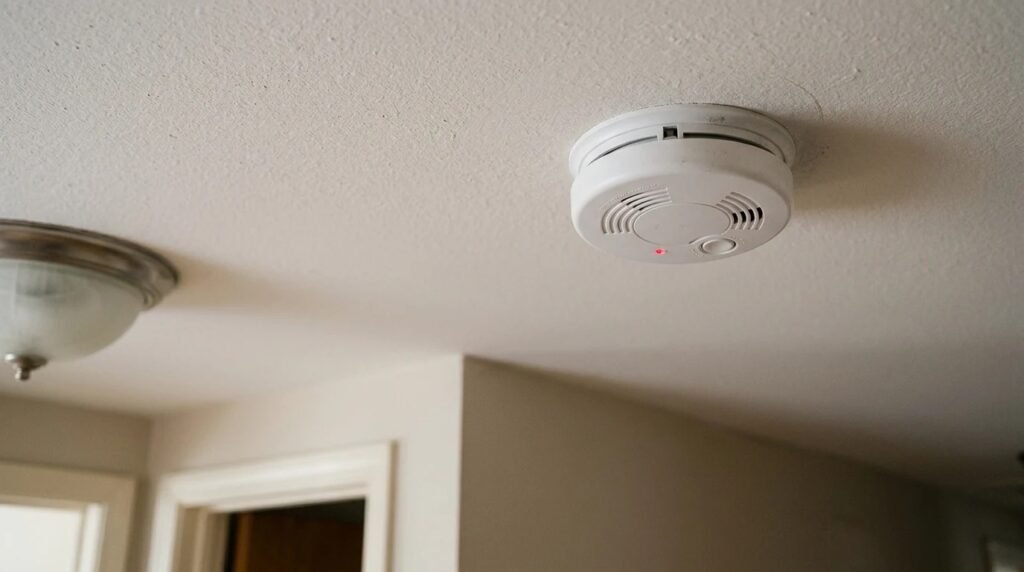
A smoke detector blinking red usually isn’t an emergency: on many models a single red blink every 30 to 60 seconds simply means the alarm is powered and working. A faster blink, a blink with a chirp, or a steady red light can mean low battery, a recent alarm, an error or end of life. Check your model’s manual, because the meaning changes by brand.
Contents
If the alarm is sounding and you smell or see smoke, get everyone out first and call 911. Everything below is about a blinking light without a real fire.
Short answer
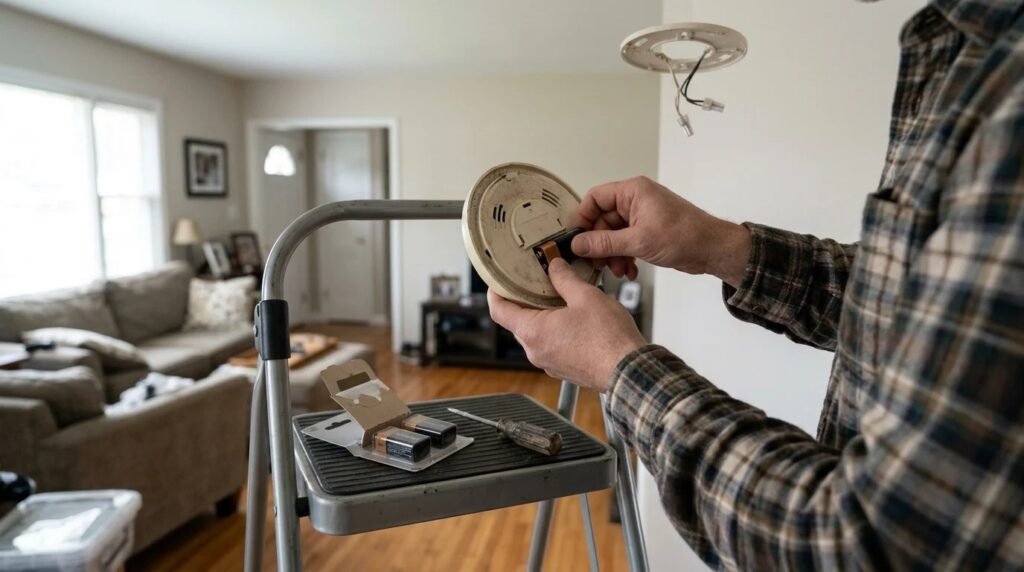
One slow red blink is usually normal. Rapid blinking often means the alarm recently went off (alarm memory). Blinking plus chirping usually means low battery or end of life. Press and hold the test button, change the battery, and replace the whole alarm if it’s about 10 years old.
Smoke detector blinking red: the 5 common meanings
- Normal power check. A red blink about once a minute shows the unit is on. Many brands work this way.
- Alarm memory. Faster blinking can mean this alarm was the one that triggered recently. Pressing the test button usually clears it.
- Low battery. Blinking together with a chirp every 30 to 60 seconds usually points to the battery.
- Error or fault. Some models blink in a pattern to signal a sensor problem. The manual lists the codes.
- End of life. Many alarms chirp and blink when they reach their roughly 10-year limit and need replacing.
What the patterns usually mean
| Pattern | Likely meaning | What to do |
|---|---|---|
| — | — | — |
| One red blink about every minute | Normal operation | Nothing |
| Rapid red blinking, no sound | Alarm memory | Press the test button to reset |
| Red blink plus chirp | Low battery | Replace the battery |
| Red blink plus chirp after a new battery | End of life or fault | Replace the alarm |
| Steady red light | Alarm or fault on some models | Check the manual |
What to do, step by step
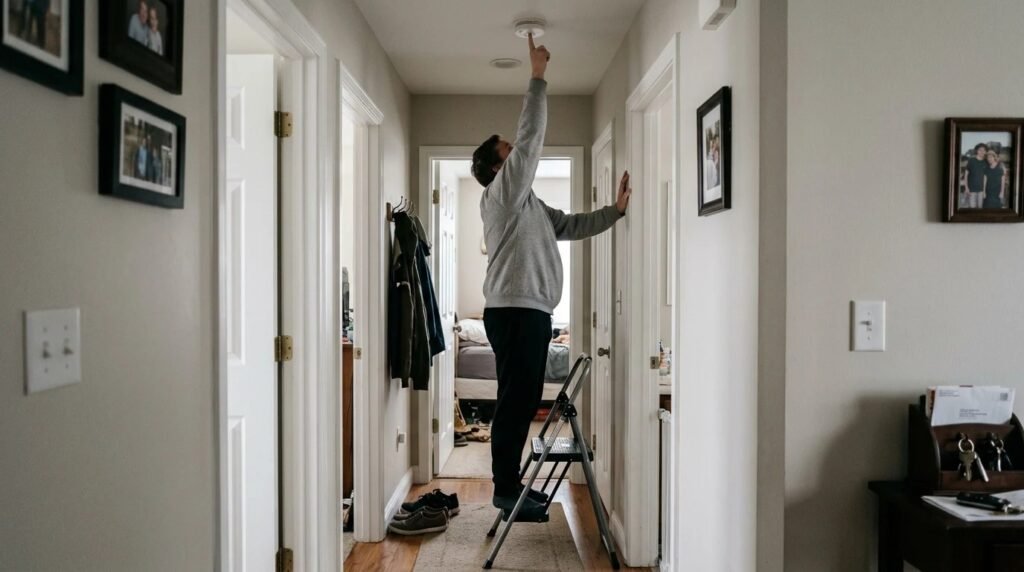
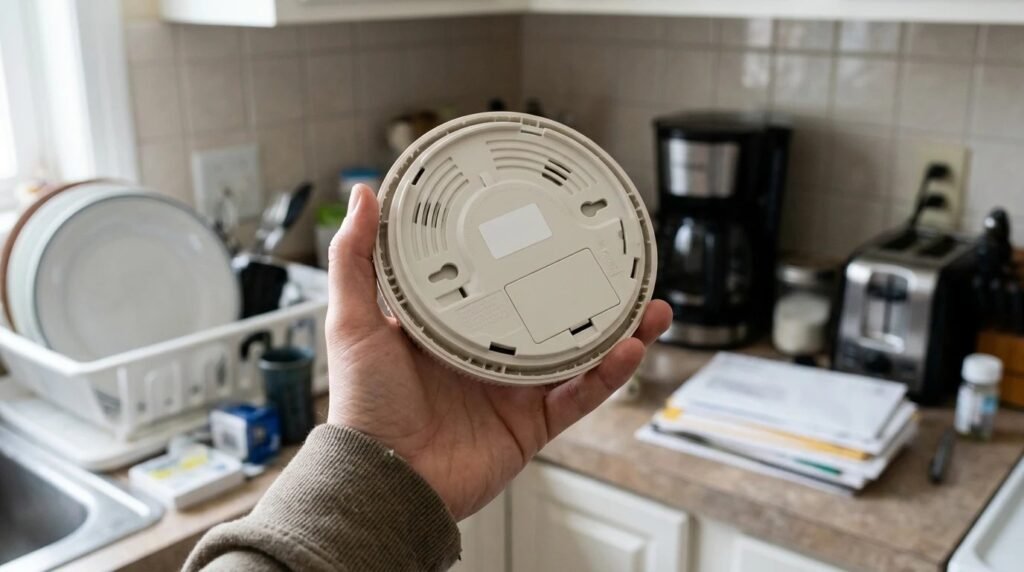
- Press and hold the test button for a few seconds. It should sound loudly, then stop.
- Replace the battery with the type printed on the alarm, and close the battery door firmly.
- Clear dust from the vents with a soft brush or vacuum attachment.
- Check the date on the back. Fire departments, including the Honolulu Fire Department, advise replacing smoke alarms every 10 years.
- Reset hardwired alarms by turning off the breaker, removing the alarm, holding the test button for 15 seconds, then reconnecting.
Battery vs hardwired alarms
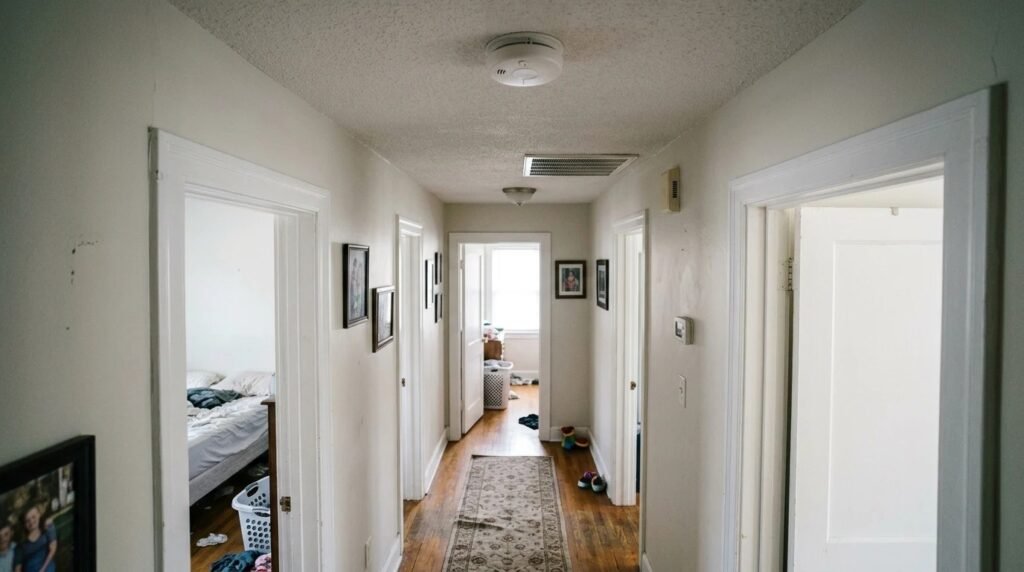
Battery-only alarms are simple: if the light pattern or chirp points to power, a fresh battery usually fixes it. Some newer models have a sealed 10-year battery, and when that runs down the whole unit is meant to be replaced.
Hardwired alarms run on house power but still have a backup battery. A blinking light with a chirp often means that backup battery is low, even though the lights are on. If several alarms are linked, the one that blinks fastest is often the one that started an alarm, which helps you find the source of a false alarm from cooking or steam.
When a smoke detector blinking red needs replacing
If the alarm keeps chirping or blinking oddly after a fresh battery and a reset, or it’s close to 10 years old, replace it. Interconnected alarms should be replaced with compatible models so they still talk to each other.
Quick FAQ
Is it normal for a smoke detector to blink red? Yes, a slow red blink is normal on many models. Why is my smoke detector blinking red and green? Some units use green for power and red for alarm or memory; check the manual. Will a blinking alarm still work? Usually, but press the test button to be sure.
Recap
- Slow blink: usually fine, just a power signal.
- Blink with chirp: battery or end of life.
- Unsure: test it, replace the battery, then the alarm.
Final thoughts
That little red light is mostly reassurance, but it’s also your cue to test the alarm. If yours is chirping too, see why is my smoke detector chirping.
Your turn: does your smoke alarm blink red, green or not at all? Tell us in the comments.
This guide is based on research and manufacturer guidance, not our own testing.
Related guides: Where to put smoke alarms · Where to put a carbon monoxide detector