


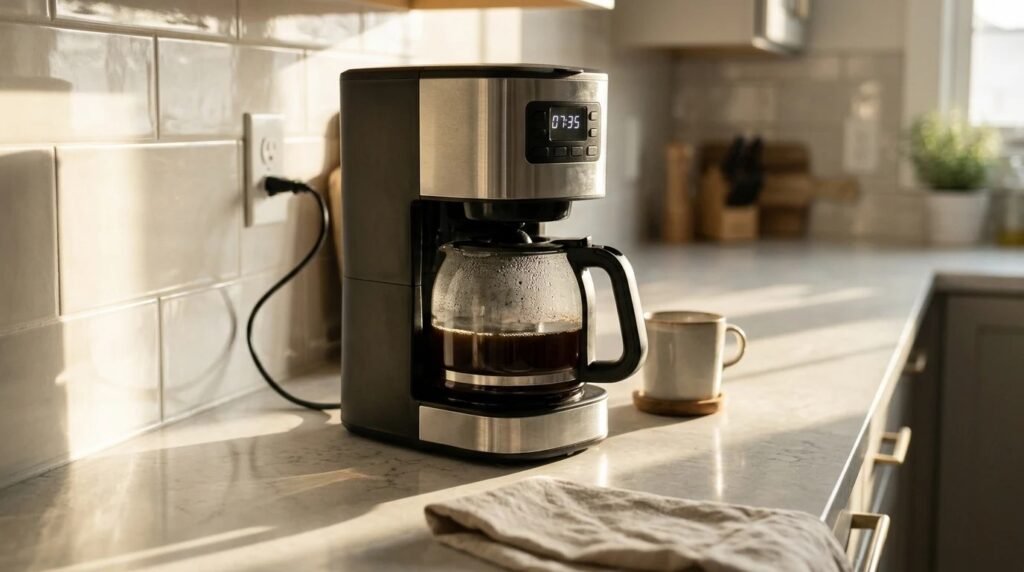
If your morning coffee tastes bitter, flat or just a little off, the beans may not be the problem. Your machine might simply need a good clean. Knowing how to clean a coffee maker keeps your coffee tasting fresh and helps the machine last longer, and it only takes a bit of vinegar and water.
Contents
- 1How to clean a coffee maker: the short answer
- 2Why the reservoir needs attention
- 3Your simple cleaning schedule
- 46 easy steps for a monthly deep clean
- 5Small habits for better-tasting coffee
- 6What about single-serve pod machines?
- 7Quick FAQ
- 8How to clean a coffee maker: a quick recap
- 9Final thoughts
- 10Related guides
Here is a simple routine you can follow every day, every week and every month.
How to clean a coffee maker: the short answer
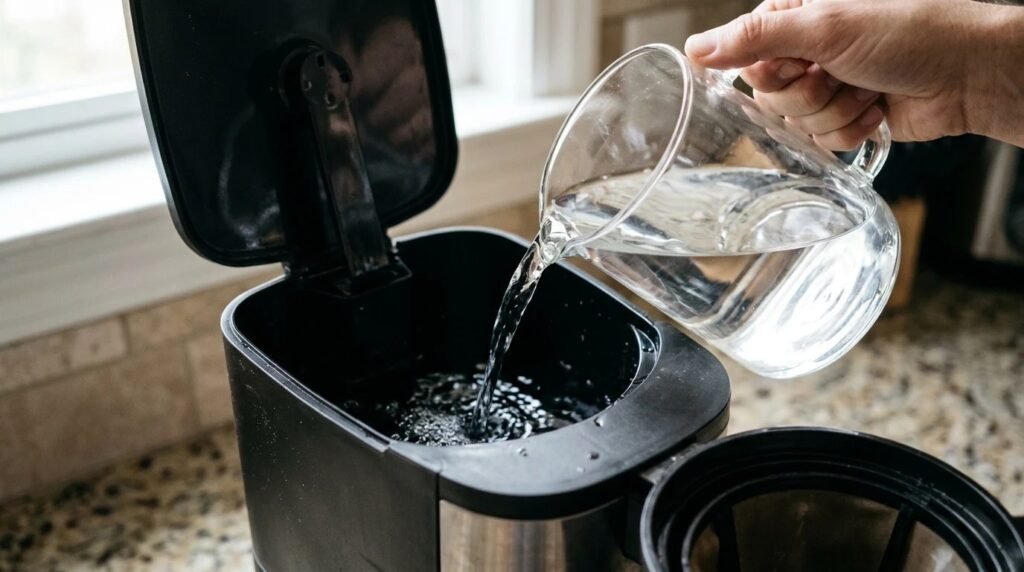
Wash the carafe and filter basket after each use, and run a vinegar cleaning cycle about once a month. NSF says most manufacturers recommend cleaning every 40 to 80 brew cycles or at least monthly. A common method is to add up to four cups of undiluted vinegar to the reservoir, let it stand for 30 minutes, run it through, then run two or three cycles of fresh water.
Why the reservoir needs attention
The water reservoir stays damp and dark, which is just what germs like. In an NSF household germ study, the coffee reservoir ranked among the germiest places in the home, with NSF describing it as a prime location for bacteria, mold and mildew. Minerals from hard water also build up inside the machine, slowing the brew and changing the taste. Because you drink what passes through it every day, a clean machine is worth the few minutes it takes.

Your simple cleaning schedule
| How often | What to clean | How |
|---|---|---|
| After every use | Carafe, filter basket, lid | Warm soapy water, rinse well |
| Every day | Reservoir lid | Leave it open to dry |
| Every week | Outside and warming plate | Wipe with a damp cloth when cool |
| Every month | Inside the machine | Vinegar cycle, then fresh water cycles |

6 easy steps for a monthly deep clean
- Empty it. Throw out old grounds and the paper filter.
- Add vinegar. Fill the reservoir with undiluted white vinegar, or follow your manual’s mix.
- Let it sit. Wait about 30 minutes so the vinegar can loosen buildup.
- Run a cycle. Brew the vinegar through into the carafe, then pour it away.
- Rinse with water. Run two or three full cycles of fresh water until the smell is gone.
- Wash removable parts. Clean the carafe and basket with warm, soapy water.
Small habits for better-tasting coffee
- Use fresh water each time. Do not leave water sitting overnight in the reservoir.
- Leave the lid open. Let the reservoir dry between brews.
- Try filtered water. It can reduce mineral buildup in hard water areas.
- Do not leave coffee on the warming plate for hours. It turns bitter and leaves stains.
What about single-serve pod machines?
Pod machines need care too. Empty and rinse the water tank regularly, wipe the needle area where the pod is pierced, and run a descaling cycle as the manual directs. Many models have a descale light or reminder. Some brands ask you to use their own descaling solution, so check before using vinegar to avoid voiding the warranty.

Quick FAQ
Can I use lemon juice instead of vinegar? Some people do, but vinegar is more common for descaling. Follow your manual if it suggests a specific product.
How do I know my coffee maker needs cleaning? Slower brewing, bitter taste, white scale or a musty smell are all signs.
Is it safe to put the carafe in the dishwasher? Some are dishwasher-safe and some are not. Check the manual or the bottom of the carafe.
How to clean a coffee maker: a quick recap
- Daily: wash the carafe and basket, dry the reservoir.
- Monthly: vinegar cycle, then two or three water cycles.
- Why: the reservoir is one of the germiest spots in the home.
- Bonus: fresh water and filtered water improve taste.
Final thoughts
Once you know how to clean a coffee maker, it becomes a five-minute habit that pays off with every cup. Set a monthly reminder on your phone so you never forget. For another quick kitchen clean, see how to descale an electric kettle.
Your turn: when did you last deep clean your coffee maker? Be honest in the comments, and tell us if your coffee tasted better afterwards.
This guide is based on NSF guidance and common cleaning methods, not our own testing. Always follow your coffee maker’s manual.