


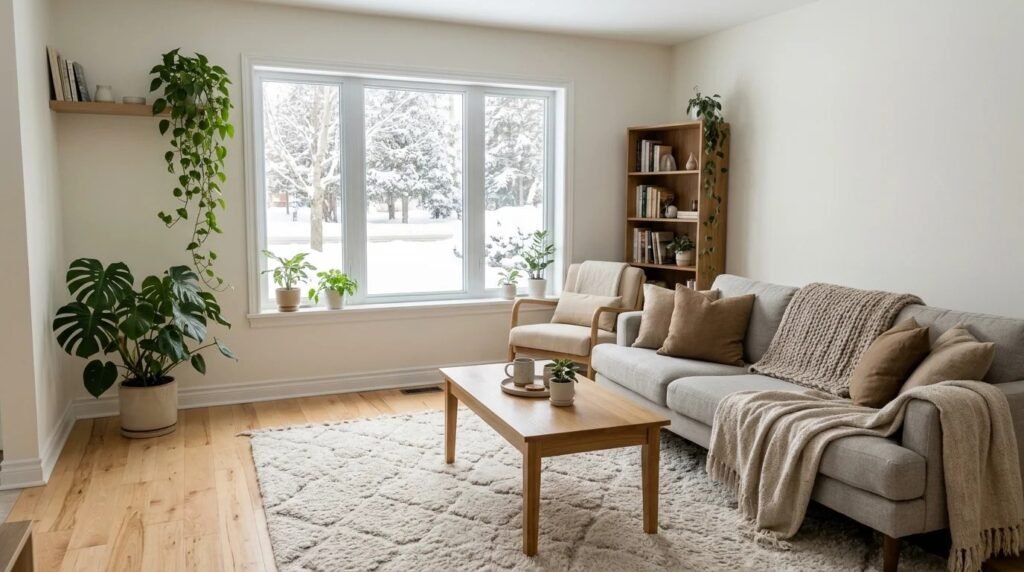
In winter we close the windows, turn up the heat and spend more time inside. That keeps us warm, but it also traps dust, cooking smoke and other pollutants in the air we breathe all day. The good news is that you can improve indoor air quality in winter without throwing the windows wide open and freezing.
Contents
A few simple habits, plus the right use of fans and filters, make a clear difference in how fresh your home feels.

Improve indoor air quality in winter: the short answer
Use the three basic strategies the EPA recommends: control the sources of pollution, improve ventilation, and clean the air with filters or air cleaners. The EPA says source control is usually the most effective approach, and it is often cheaper than adding ventilation.
Why air gets worse in winter
With doors and windows closed, less outdoor air replaces the air inside. Everyday activities such as cooking, cleaning, burning candles and running a fireplace add particles and gases. Dry heating can also make dust feel worse. Without a way out, these pollutants build up over the day.

Common winter sources and simple fixes
| Source | What it adds | Simple fix |
|---|---|---|
| Cooking, especially frying | Smoke and fine particles | Run the range hood vented outside |
| Showers and baths | Moisture | Run the bathroom fan for a while after |
| Candles and incense | Smoke and soot | Burn less often or switch to LED candles |
| Cleaning sprays | Chemical vapors | Use less, open a window briefly |
| Dust and pet dander | Particles | Vacuum often and use a good filter |

8 easy tips for cleaner winter air
- Use exhaust fans. The EPA notes that kitchen and bathroom fans that vent outdoors remove pollutants straight from the room.
- Open a window briefly. A few minutes of fresh air when the weather allows can refresh a stuffy room.
- Change your HVAC filter. A clogged filter cannot trap dust well. Check it monthly in heating season.
- Run an air purifier. Place it in the room you use most, sized for that room.
- Cut back on candles and sprays. They add smoke and chemicals you then breathe.
- Keep humidity in range. Too dry feels uncomfortable, and too damp can lead to mold. Aim for a moderate level.
- Vacuum and dust regularly. Less dust on surfaces means less dust in the air.
- Leave shoes at the door. It keeps outdoor dirt from spreading around the house.
What does not help much
Houseplants look lovely, but the EPA says they do not meaningfully clean indoor air, and overwatered soil can encourage mold. Air fresheners only cover smells and add more chemicals. Ozone generators sold as air cleaners can irritate your lungs. Stick with the basics above for real results.
A simple daily routine
Start the day by opening a window for a few minutes while you make breakfast with the range hood on. Run the bathroom fan after every shower. Keep the air purifier on a low or auto setting in the main living area, and move it to the bedroom before bed. Once a week, vacuum and dust. Once a month, check the furnace filter. These small habits add up to cleaner air all season.

Quick FAQ
Is it bad to open windows in winter? Not for short periods. A few minutes is enough to swap stale air, and the room warms back up quickly.
Do I need an air purifier in winter? It is not a must, but it helps with dust, pet dander and smoke, especially in bedrooms.
How often should I change my furnace filter? Check it monthly in heating season and follow the filter maker’s guidance. Change it sooner if it looks gray and dusty.
Improve indoor air quality in winter: a quick recap
- Sources first: cook with the fan on and cut back on candles and sprays.
- Ventilate: use exhaust fans and open a window briefly.
- Filter: fresh HVAC filters and a well-placed air purifier.
- Balance: keep humidity moderate.
Final thoughts
You do not need expensive gear to improve indoor air quality in winter. Start with your biggest sources and your fans, then add filtering where it helps most. Our guide to HEPA vs activated carbon filters explains which filter handles what.
Your turn: what makes your home feel stuffy in winter: cooking, pets or dry heat? Share it in the comments and we will cover the most common problems in future guides.
This guide is based on EPA indoor air quality guidance, not our own testing. If you have health concerns about your indoor air, talk to a doctor or a qualified professional.




1 Comment