


On cold mornings you open the curtains and the windows are dripping. Some days there’s even a little puddle on the sill. Condensation on windows is incredibly common in winter, and a bit of fog now and then isn’t a crisis. But if it happens every day, it’s a sign your indoor air holds more moisture than your home can handle.
Contents
Here’s what’s going on and how to fix it.
Why condensation on windows happens
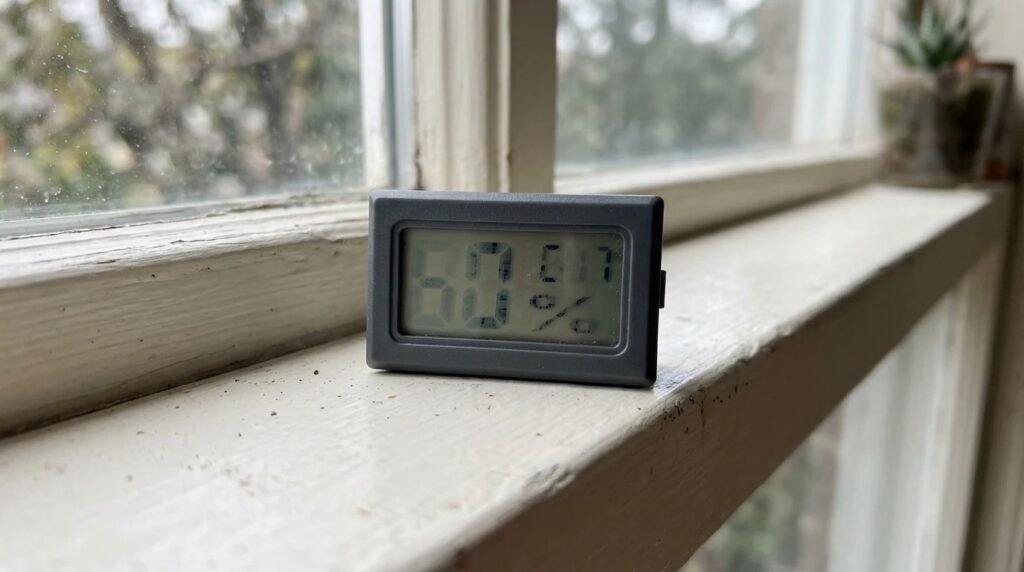
Warm air holds more moisture than cold air. When warm, humid indoor air touches cold glass, it cools down and can’t hold all that water vapor, so the extra turns into droplets. It’s the same thing that happens to a cold drink on a summer day. The colder it is outside and the more humid it is inside, the more condensation you’ll see.
When should you worry?
Occasional fog after a shower or cooking is normal. Daily dripping, water pooling on sills, black spots on the window frame or peeling paint nearby are signs to act. The EPA says condensation can be a sign of high humidity and recommends drying wet surfaces quickly and reducing the moisture source. It also suggests keeping indoor humidity below 60 percent, ideally between 30 and 50 percent.
8 easy fixes
- Measure humidity. A cheap hygrometer tells you if you’re above 50 percent.
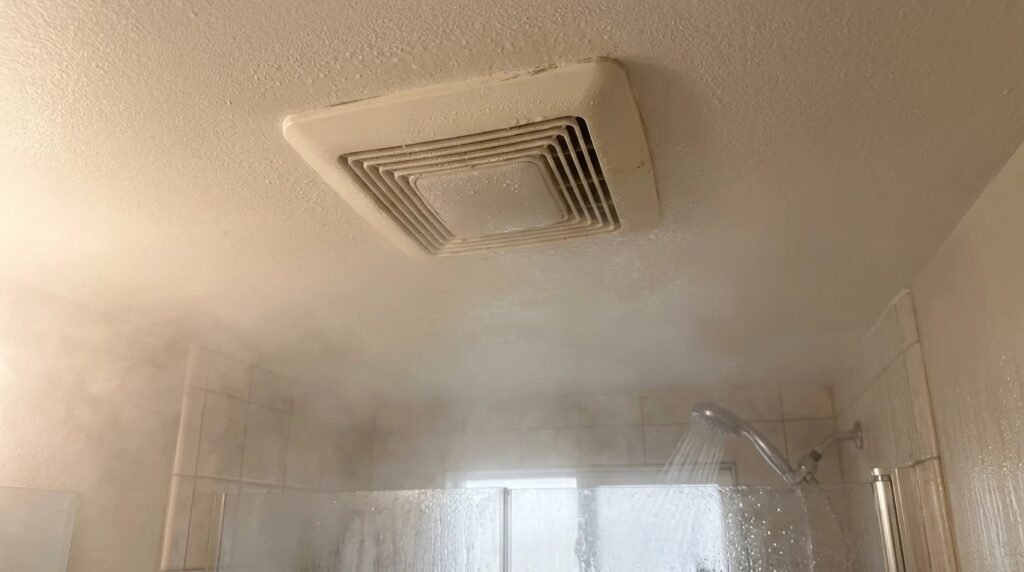
- Run the bathroom fan. During showers and for a while after.
- Use the range hood. And put lids on simmering pots.
- Turn down the humidifier. Or turn it off if humidity is already high.
- Dry laundry outside or in the dryer. Drying clothes indoors adds a lot of moisture.
- Open curtains and blinds. Letting warm room air reach the glass helps.
- Ventilate briefly. A few minutes of fresh air on a dry day can lower humidity.
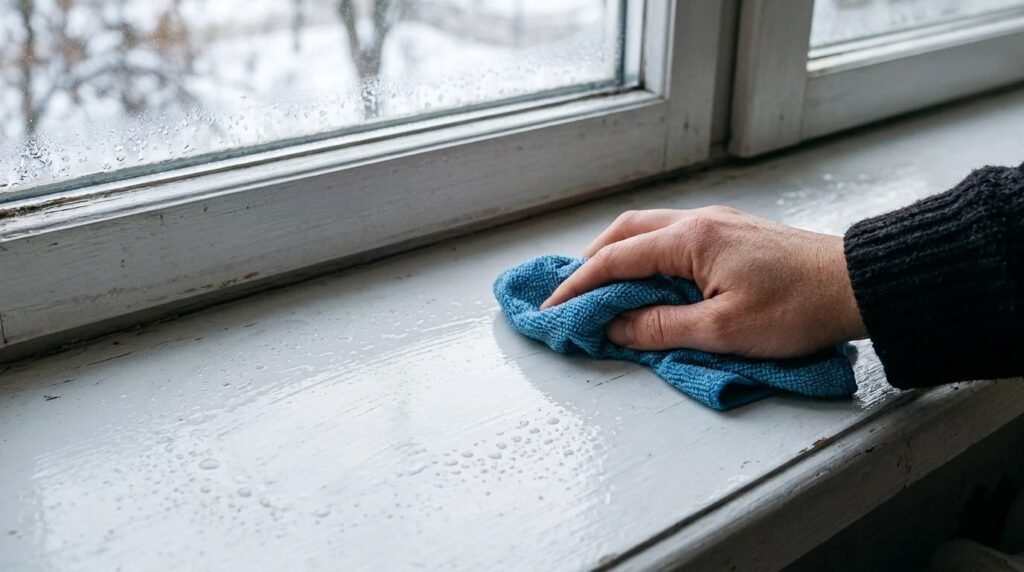
- Wipe it away. Dry the glass and sills each morning so water doesn’t sit.
Where the moisture comes from
| Source | Why it adds moisture | What to do |
|---|---|---|
| Showers and baths | Lots of steam | Exhaust fan on |
| Cooking | Boiling and simmering | Range hood and lids |
| Drying clothes indoors | Water evaporates into the room | Use the dryer or dry outside |
| Humidifiers | Adds moisture on purpose | Set to 30 to 50 percent |
| Lots of plants | They release water vapor | Group them away from windows |
Bedroom windows fog up overnight
If the bedroom is the worst room, you’re in good company. Two people breathing all night in a closed room add a surprising amount of moisture, and bedrooms are often kept cooler, so the glass is colder too. Cracking the bedroom door, keeping curtains slightly open, running a small fan or a quiet dehumidifier and turning off any bedroom humidifier usually help. Wiping the glass first thing in the morning stops water from soaking into the frame.
Condensation between the panes
If the fog is between two layers of glass in a double-pane window, that’s a different issue. It usually means the seal has failed. Wiping won’t help, and the window’s insulating value has dropped. A window professional can tell you if the glass unit can be replaced or if the window needs replacing.
Condensation on the outside
Fog on the outside of the glass on a cool morning is usually good news: it means your windows are insulating well and keeping heat inside. It clears as the sun warms things up.

Quick FAQ
Is condensation on windows bad? Occasional fog isn’t. Daily dripping can lead to mold and damage to frames and sills.
Do dehumidifiers help? Yes, in rooms or homes where humidity stays above 50 percent.
Will new windows fix it? Better-insulated windows have warmer glass, which helps, but lowering indoor humidity matters most.
Condensation on windows: a quick recap
- Cause: humid indoor air meets cold glass.
- Target: 30 to 50 percent indoor humidity.
- Fixes: fans, lids, less indoor laundry drying, wipe daily.
- Between panes: a failed seal; call a pro.
Final thoughts
Condensation on windows is your home’s way of telling you the air is too damp. Grab a hygrometer, run your fans and check our guide to ideal indoor humidity in winter. If drafts are part of the problem, see how to stop window drafts.
Your turn: which room in your house gets the foggiest windows? Our guess is the bedroom. Tell us in the comments.
This guide uses EPA moisture and mold guidance, not our own testing.