



That cold breath of air near the window is not your imagination. Gaps around windows let warm air out and cold air in, and your heater works harder to keep up. Learning how to stop window drafts is one of the cheapest ways to feel warmer this winter, and most fixes cost only a few dollars.
Contents
You do not need new windows. A candle, some weatherstripping and a tube of caulk can make a real difference in an afternoon.

How to stop window drafts: the short answer
Find where air is leaking, then seal moving parts with weatherstripping and fixed gaps with caulk. Add window film or heavy curtains for extra protection. Sealing leaks pays off: ENERGY STAR estimates homeowners can save an average of 15 percent on heating and cooling costs by air sealing and adding insulation across the home.
How to find the leaks
On a windy day, hold a lit candle or incense stick near the edges of the window, the sash and the trim. If the flame flickers or the smoke moves sideways, you have found a leak. You can also run your hand slowly around the frame and feel for cold spots. Mark each spot with painter’s tape so you remember where to work.
Which fix goes where
| Where the draft is | Best fix | Typical cost |
|---|---|---|
| Between the sash and frame (moving parts) | Foam or V-strip weatherstripping | Low |
| Between trim and wall (fixed gaps) | Paintable caulk | Low |
| Cold glass on old single-pane windows | Plastic window insulation film | Low |
| Whole window at night | Thermal or heavy curtains | Low to medium |
| Air conditioner left in the window | Remove it or use an insulated cover | Low |
7 easy fixes for drafty windows
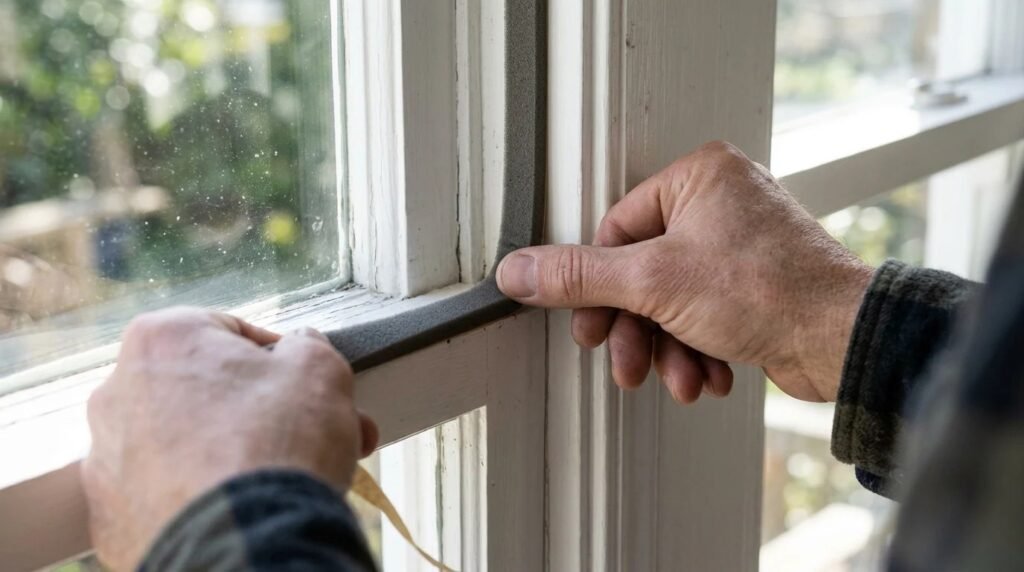
- Add weatherstripping. Stick foam tape or V-strip where the window closes. Clean the surface first so it holds.
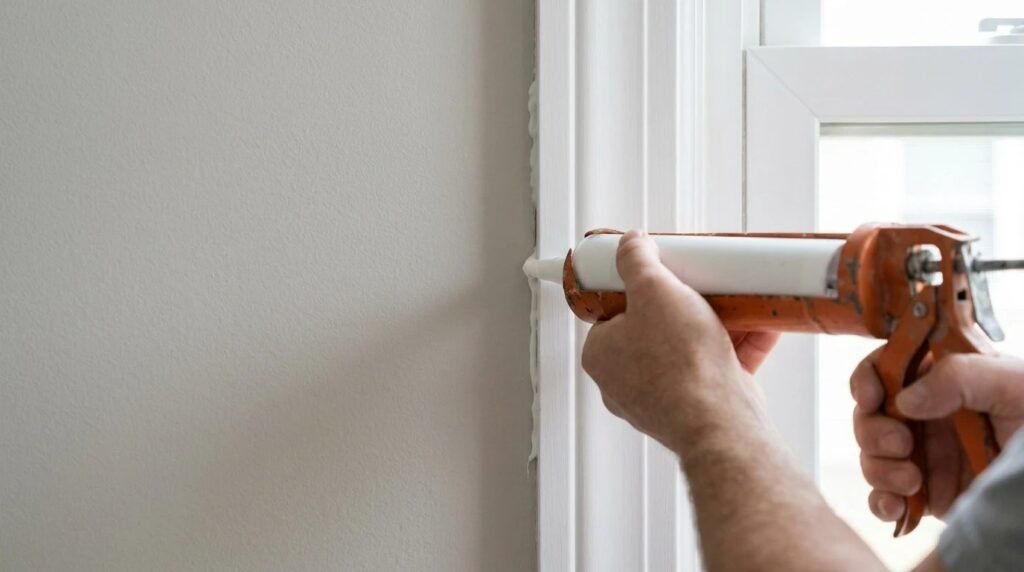
- Caulk fixed gaps. Seal cracks between the trim and the wall. Use caulk only on parts that do not move.
- Lock the window. Locking a sash window pulls the parts tighter together and can reduce a draft on its own.
- Use window film. Clear shrink film over the frame adds an air pocket that slows heat loss.
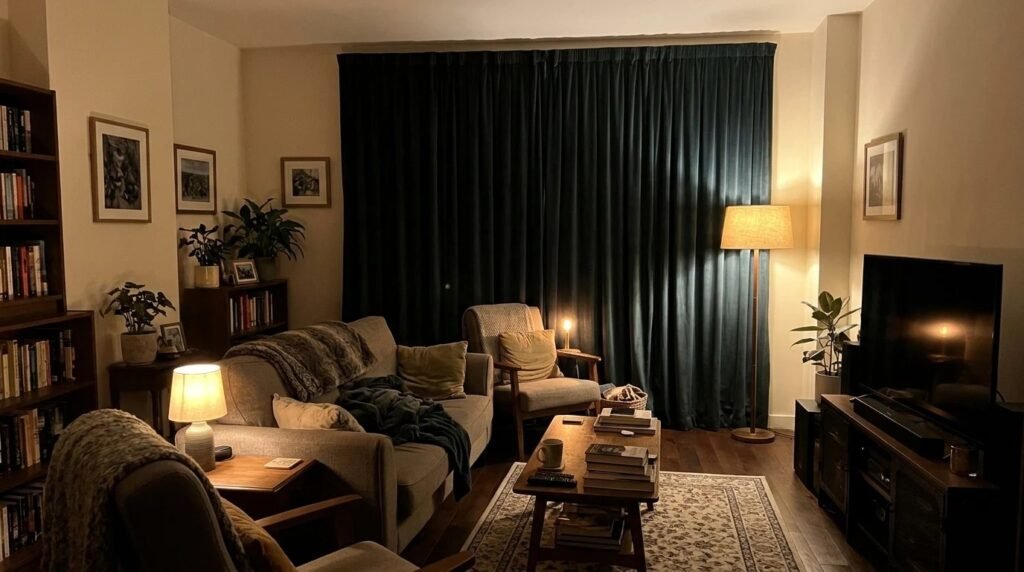
- Close heavy curtains at night. Open them on sunny days to let in free warmth.
- Try a draft snake. A fabric tube along the windowsill blocks low gaps.
- Take out window AC units. They often leave gaps around the sides all winter.
Do not forget the rest of the room
Windows are easy to spot, but they are rarely the only leak. Check the bottom of exterior doors, where a simple door sweep can close the gap. Feel around electrical outlets and switch plates on outside walls, since cheap foam gaskets fit behind the cover plates. Look at gaps where pipes and cables come through walls. Sealing a few of these small spots in the same afternoon often makes the whole room feel warmer, not just the area by the window.
When it is time for a pro
If you see rotting wood, broken glass or condensation between double panes, sealing may not be enough. A window repair pro or an energy audit can show bigger leaks in the attic, basement and walls, which often matter even more than windows.
Quick FAQ
Can I caulk a window shut? Do not caulk the moving parts. Windows can be an emergency exit, so use removable weatherstripping on anything that opens.
Is window film hard to remove? Most kits use double-sided tape and come off in spring. Test the tape on a small spot first if your paint is old.
Do thermal curtains really help? They add a layer between the cold glass and the room, which helps most at night when there is no sun to gain.
How to stop window drafts: a quick recap
- Find leaks: use a candle or your hand on a windy day.
- Moving parts: weatherstripping.
- Fixed gaps: caulk.
- Extra layer: window film and heavy curtains.
Final thoughts
Now you know how to stop window drafts with simple tools and a free afternoon. Start with the window you sit near most, feel the difference, then move room by room. Pair it with our guide to ceiling fan direction in winter for even more comfort.
Your turn: which window in your home is the draftiest? Share your best draft-stopping trick in the comments so other readers can try it.
This guide is based on ENERGY STAR information and common home weatherization practice, not our own testing. Follow product instructions and local safety rules.