


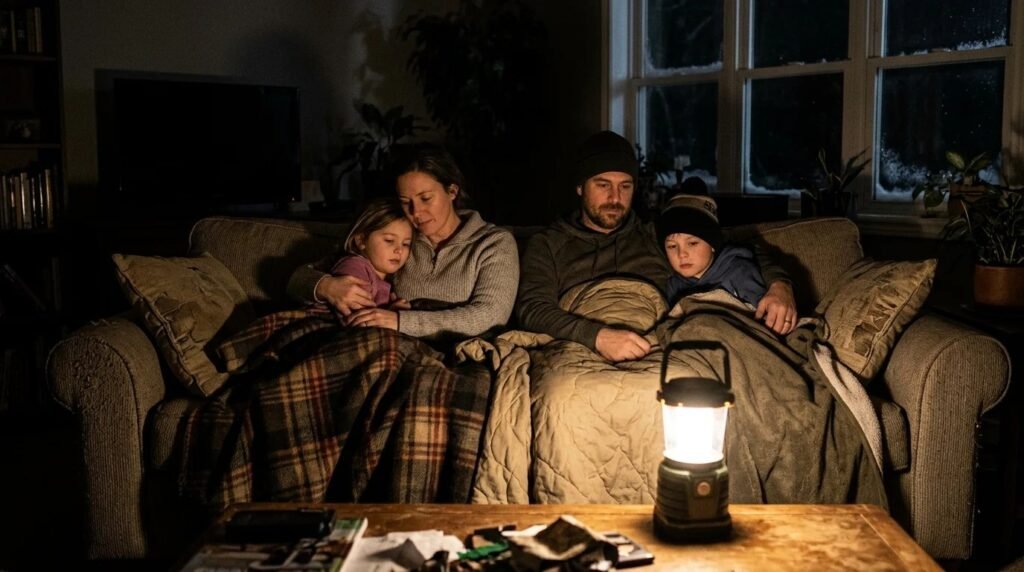
When the power goes out in the middle of winter, the house starts cooling down right away. The first hour feels like an adventure; by evening, it’s just cold. Knowing how to stay warm during a power outage, safely, is important because the most dangerous mistakes happen when people get desperate for heat.
Contents
Here’s what to do, what never to do and how to prepare before the next storm.

How to stay warm during a power outage: the short answer
Layer up, gather everyone into one room, close off the rest of the house, use blankets and sleeping bags and eat and drink something warm if you can do it safely. The CDC says to keep at least one safe heat source ready, never use a gas stove or oven to heat your home and seek shelter with friends or at a community shelter if it gets too cold.
10 safe, simple steps
- Dress in layers. Thermal base layers, sweaters, hats and warm socks. A lot of body heat escapes from your head.
- Pick one room. A small interior room with few windows holds heat best.
- Close doors to unused rooms and hang blankets over open doorways.
- Cover windows with curtains or blankets at night; open them for sun during the day.
- Block drafts under doors with towels.
- Use sleeping bags and extra blankets. Sleep close together.
- Eat and drink. Food fuels body heat; avoid alcohol, which can make you lose heat.
- Keep moving. Light activity helps you stay warm.
- Check on neighbors, especially older adults and families with babies.
- Know when to leave. Go to a warming center or a friend’s home if it’s too cold.

Carbon monoxide: the hidden danger
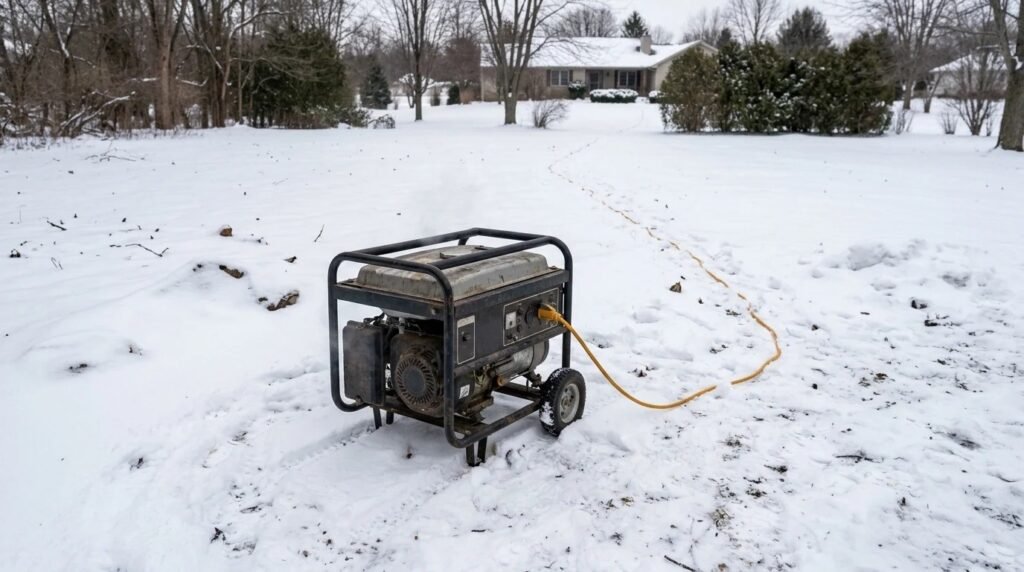
Carbon monoxide (CO) poisoning is a serious risk during outages. The CDC warns never to run a generator inside your home, basement or garage, or less than 20 feet from any window, door or vent. Never use a charcoal grill, camping stove or lantern indoors, and never heat your home with a gas range or oven. Use a battery-powered or battery backup CO alarm. If it sounds, get everyone outside and call 911.
Safe vs unsafe heat sources
| Generally safe | Never indoors |
|---|---|
| Blankets, sleeping bags, layers | Generators |
| A fireplace with dry wood, properly vented | Charcoal or gas grills |
| Battery-powered heated clothing | Camping stoves and propane heaters not rated for indoor use |
| Hand and foot warmers | Gas stoves or ovens used for heat |
Protect your home too
While you focus on staying warm, think about your pipes. If the house gets very cold, pipes can freeze. Open cabinet doors under sinks and let a faucet trickle if you still have water pressure. Our guide to keeping pipes from freezing has more. Keep the fridge and freezer closed; the CDC says a full freezer keeps food safe for about 48 hours if the door stays closed.

Prepare before the next storm
- Build a kit: flashlights, batteries, blankets, hats, gloves and a battery radio.
- Install CO alarms with battery backup. See where to put a CO detector.
- Charge power banks when a storm is forecast.
- Learn where your local warming centers are.
- Prep your smart home. Read what happens to your smart home during a power outage.
Quick FAQ
How long will a house stay warm without power? It depends on insulation and outdoor temperature. A well-sealed home stays warmer much longer.
Can I use a propane heater indoors? Only models specifically rated for indoor use, with ventilation and a CO alarm. Follow the manufacturer’s instructions.
Is it safe to use a fireplace? Yes, if it’s properly vented and maintained. Keep a screen in place and never leave it unattended.
Stay warm during a power outage: a quick recap
- Layer up and gather in one room.
- Seal the room with blankets and towels.
- Never use generators, grills or ovens for heat indoors.
- Leave for a warming center if it gets too cold.
Final thoughts
Knowing how to stay warm during a power outage keeps a cold night from becoming a dangerous one. Put a kit together this week while the lights are still on.
Your turn: what’s in your winter outage kit? Share your must-haves in the comments; your list could help a neighbor.
This guide uses CDC guidance, not our own testing. In an emergency, call 911.


