


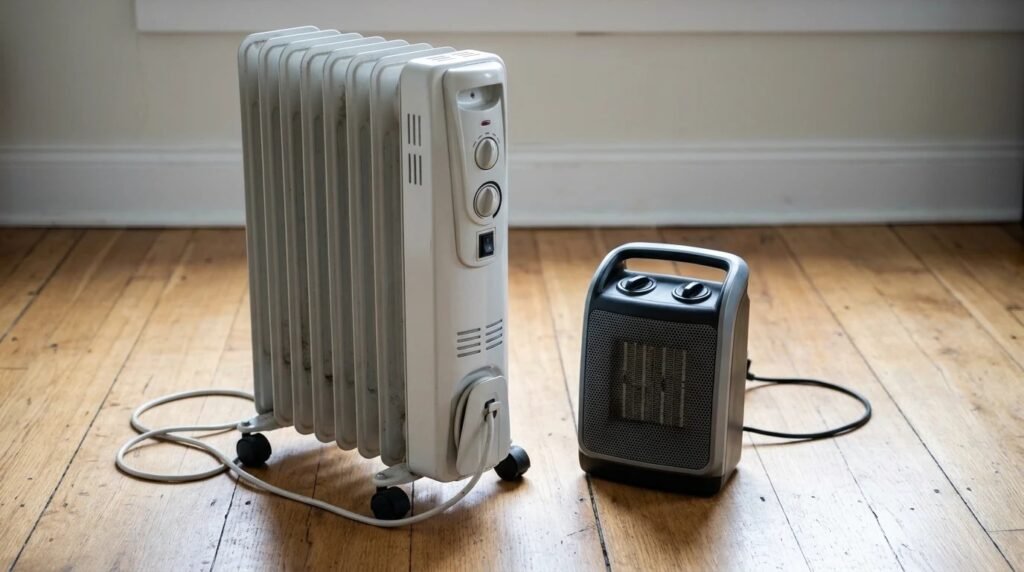
Walk down the space heater aisle and you’ll mostly see two types: chunky radiators that look like old-school heaters and small, boxy ceramic heaters with a fan. Both plug into the wall, and most draw about the same maximum power. So which one makes sense? The oil-filled radiator vs ceramic heater choice comes down to how you’ll use it.
Contents
Here’s the practical difference, without the marketing.
Oil-filled radiator vs ceramic heater: the short answer
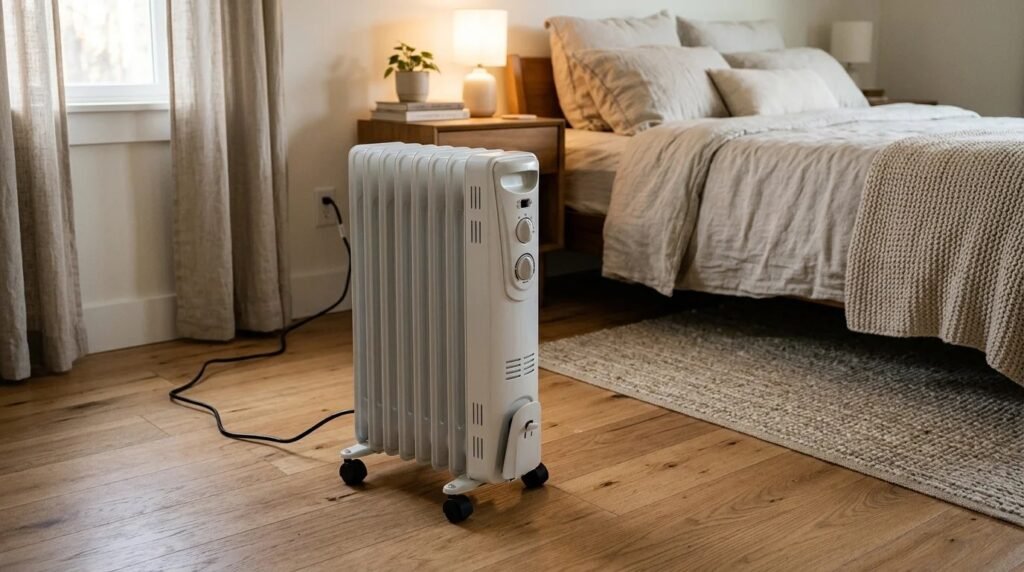
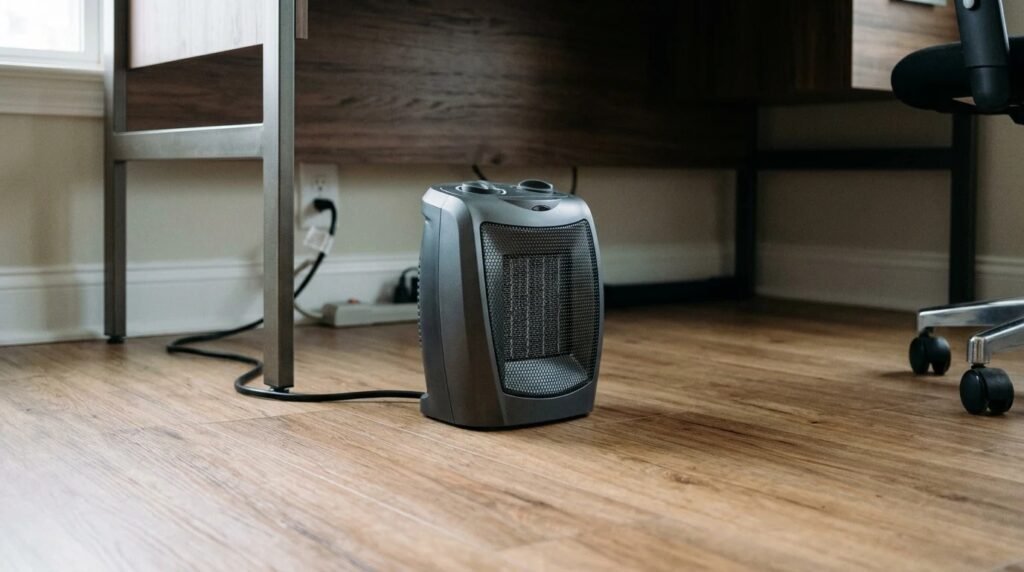
Choose a ceramic heater for quick, targeted warmth, like under a desk or in a bathroom while you get ready. Choose an oil-filled radiator for steady, quiet, longer heat, like warming a bedroom overnight. Most models top out around 1,500 watts, so the maximum running cost per hour is similar; what changes is how the heat feels and how the thermostat cycles.
How they work
A ceramic heater uses a ceramic heating element and a fan to blow warm air into the room. You feel it quickly. An oil-filled radiator heats oil sealed inside its fins (the oil isn’t burned or used up), which then radiates heat into the room. It takes longer to warm up but keeps giving off heat for a while after it cycles off.
Side-by-side comparison
| Feature | Oil-filled radiator | Ceramic heater |
|---|---|---|
| Heat-up time | Slow, often 15 minutes or more | Fast, within a minute or two |
| Type of heat | Gentle, steady radiant warmth | Directed warm airflow |
| Noise | Nearly silent | Fan noise |
| Size and weight | Bulky and heavy | Small and light |
| Best for | Bedrooms, longer sessions | Quick bursts, small spaces, desks |
| Surface temperature | Fins get hot to the touch | Grilles can get hot; check the model |
What does it cost to run?
At the 2026 U.S. average of about 18.2 cents per kWh from EIA, a 1,500-watt heater running flat out costs about 27 cents an hour. In real life, both types cycle on and off with their thermostats, so the actual cost is usually lower. Radiators sometimes feel more economical because the oil keeps radiating heat between cycles, but the room’s insulation and your thermostat setting matter more. For more detail, see how much it costs to run a space heater.
6 easy facts to know
- Same max power, different feel. Most are 1,500 watts at full blast.
- Ceramic is faster. Great when you need warmth now.
- Radiators are quieter. Better for light sleepers.
- Both need space. Fire safety groups commonly advise keeping heaters at least 3 feet from anything that can burn.
- Plug straight into the wall. Not into extension cords or power strips.
- Look for safety features. Tip-over switches, overheat protection and a recognized testing lab certification.

Which room gets which heater?
Here’s a simple way to think about it. A home office or a chilly corner where you sit for an hour or two: ceramic, aimed at your legs, for fast warmth. A bedroom where you want steady, silent warmth while you read before bed: an oil-filled radiator, started a little before bedtime. A bathroom: only use a heater designed and rated for bathroom use, kept well away from water. A garage workshop: check that the heater is rated for that kind of space. Either way, heating one small room you’re actually using is usually cheaper than raising the whole-house thermostat.
Safety first
Space heaters are useful, but they need respect. Keep them away from curtains, bedding and furniture, never leave them running unattended or while you sleep unless the manufacturer says the model is designed for it, and keep kids and pets away. Our space heater safety rules cover the essentials.
Quick FAQ
Which is more energy efficient? At the same wattage, both turn electricity into heat at similar efficiency. The right type for the room matters more.
Are oil-filled radiators safer? They have no exposed glowing elements, but fins get hot. Both types need clearance and supervision.
Do oil-filled radiators need refilling? No. The oil is sealed in and isn’t consumed.
Oil-filled radiator vs ceramic heater: a quick recap
- Ceramic: fast, compact, great for quick warmth.
- Oil-filled: slow to warm, quiet, steady heat.
- Cost: similar per hour at the same wattage.
- Safety: 3 feet of clearance, wall outlet, never unattended.
Final thoughts
The oil-filled radiator vs ceramic heater decision is really about where and how long you’ll use it. Many homes end up with one of each. And remember, warming yourself can be cheaper than warming the room; see electric blanket vs space heater.
Your turn: which type do you use, and where? Share your setup in the comments; it helps other readers choose.
This comparison uses typical product specifications and EIA price data, not our own testing. Follow your heater’s safety instructions.