


It’s one of the most repeated bits of home advice: “Just leave the heat on all day. It costs more to heat a cold house back up.” It sounds logical, and plenty of people swear by it. But for most homes with a furnace or boiler, the physics says otherwise. Let’s clear up whether you should leave the heat on all day.
Contents
There’s one important exception, which we’ll get to.

Should you leave the heat on all day?
For most homes, no. According to the U.S. Department of Energy, turning your thermostat down 7 to 10 degrees for 8 hours a day while you’re away or asleep can save as much as 10 percent a year on heating. The Department of Energy also estimates you save about 1 percent for each degree of setback over an eight-hour period.
Why the myth is wrong
Your house loses heat to the outside all the time, and it loses heat faster when the inside is much warmer than the outside. When you lower the thermostat, the house cools a bit and heat loss slows down. The energy you save during those cooler hours is more than the energy needed to warm back up. In other words, a cooler house leaks less money.
The heat pump exception
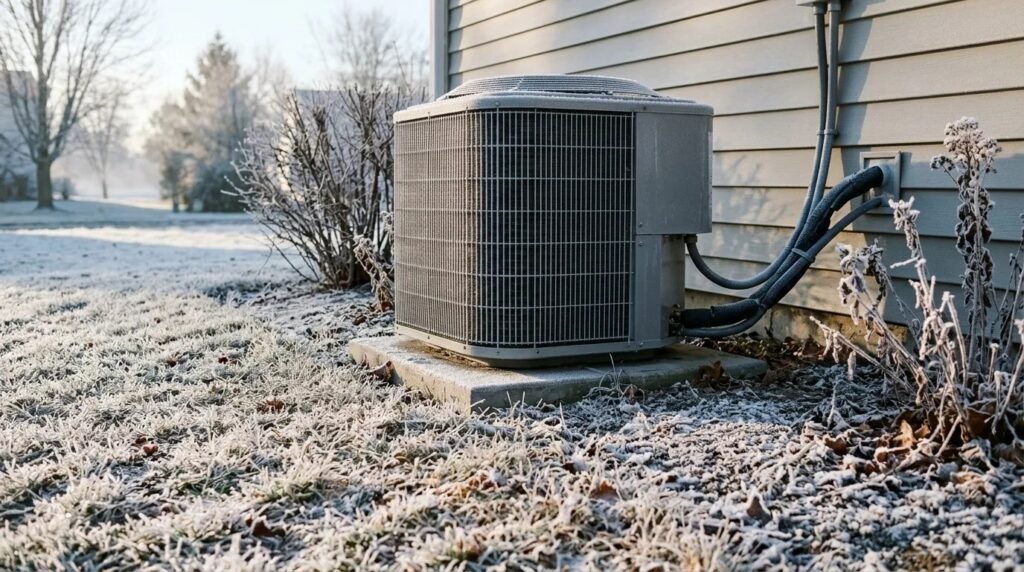
Heat pumps are different. The DOE’s Energy Saver Guide advises against setting back a heat pump unless you have a thermostat designed for heat pumps. A big setback can trigger expensive backup resistance heat during recovery. With a heat pump, smaller setbacks, or a smart thermostat that knows how to recover gradually, are the way to go. If you’re unsure what you have, see heat pump vs furnace.
Who should keep it steady?
| Situation | Best approach |
|---|---|
| Gas or oil furnace, boiler | Set back 7 to 10°F while away or asleep |
| Heat pump with a standard thermostat | Small setbacks or none |
| Heat pump with a heat-pump-aware smart thermostat | Moderate setbacks with gradual recovery |
| Radiant floor heat | Smaller setbacks; it responds slowly |
| Extreme cold or exposed pipes | Keep it steady; the Red Cross suggests one setting day and night during cold snaps |
5 simple facts that save money
- Setbacks save. Up to 10 percent a year with 7 to 10°F for 8 hours.
- Cranking it up doesn’t heat faster. Most systems heat at the same rate regardless of setting.
- Automate it. A schedule means you never come home to a cold house. See do smart thermostats save money.
- Pre-warm. Schedule the heat to come back 30 to 60 minutes before you get home or wake up.
- Seal leaks. A tighter house stays warm longer during setbacks.
What about leaving it on while on vacation?
Don’t turn the heat off completely in winter. The American Red Cross recommends leaving it on at no lower than 55°F when you’re away during cold weather, to help prevent frozen pipes. That’s a big setback from normal, so you still save, without risking a burst pipe. Our guide to keeping pipes from freezing has more.

Quick FAQ
Is it cheaper to keep the heat at a constant temperature? Usually not for furnaces and boilers. Setbacks save energy.
How low should I set the heat when I’m at work? About 7 to 10°F below your normal setting, per the DOE, if your system and household allow.
Does turning the heat off at night save money? Turning it down saves. Turning it fully off in cold weather risks frozen pipes and discomfort.
Leave the heat on all day: a quick recap
- Myth: reheating costs more than you save. It doesn’t, for most systems.
- Fact: setbacks can save up to 10 percent a year.
- Exception: heat pumps need small setbacks or a smart thermostat.
- Away: keep it at 55°F or higher in winter.
Final thoughts
So should you leave the heat on all day? Probably not, unless you have a heat pump or a special situation. Set a schedule, layer up and let the savings add up quietly.
Your turn: did you grow up hearing “leave the heat on, it’s cheaper”? Tell us in the comments whether you’re going to try a setback this week.
This guide uses U.S. Department of Energy and American Red Cross guidance, not our own testing.