
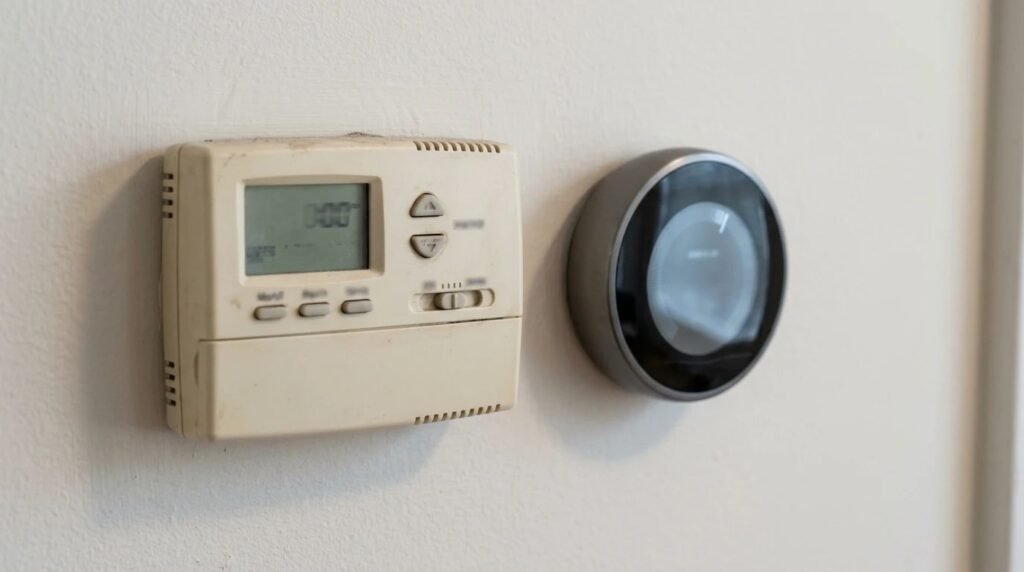
Plenty of homes already have a programmable thermostat, the kind with tiny buttons and a schedule nobody remembers setting. So is a shiny new smart model really better, or just more expensive? The smart thermostat vs programmable thermostat question comes down to one thing: whether you’ll actually use the schedule.
Contents
- 1Smart thermostat vs programmable thermostat: the short answer
- 2How they differ
- 3Side-by-side comparison
- 46 simple facts to know
- 5Installation: what to expect
- 6Who should stick with programmable?
- 7Getting the most from either one
- 8Quick FAQ
- 9Smart thermostat vs programmable thermostat: a quick recap
- 10Final thoughts
- 11Related guides
Here’s an honest comparison, using ENERGY STAR data.
Smart thermostat vs programmable thermostat: the short answer
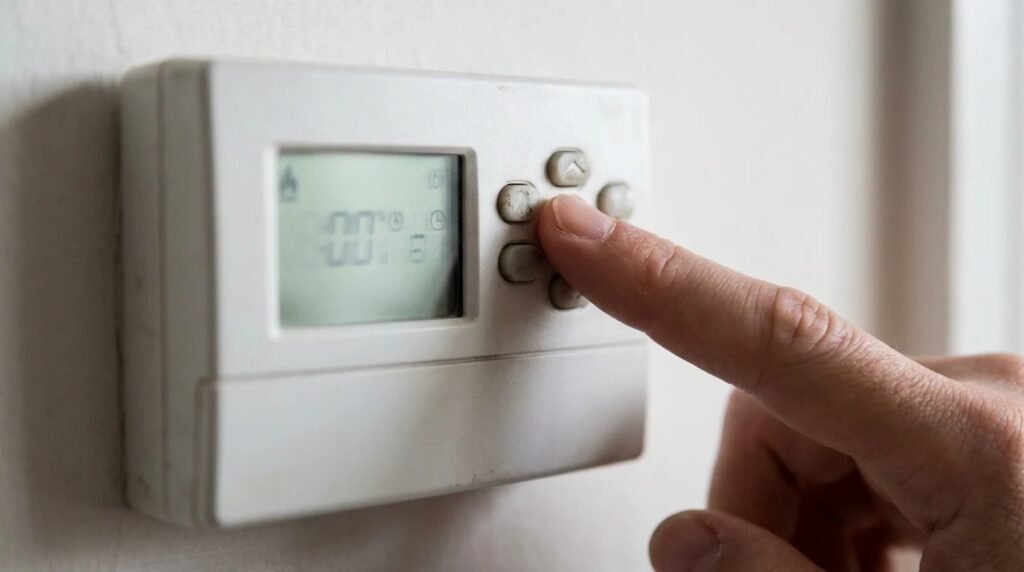
A programmable thermostat can save just as much as a smart one if you set it up and stick to it. The problem is that many people don’t. ENERGY STAR says homeowners often don’t understand or use programmable thermostats, while certified smart thermostats learn your preferences and adjust based on occupancy and weather. On average, ENERGY STAR estimates certified smart thermostats save about 8 percent on heating and cooling bills, or around $50 a year.
How they differ
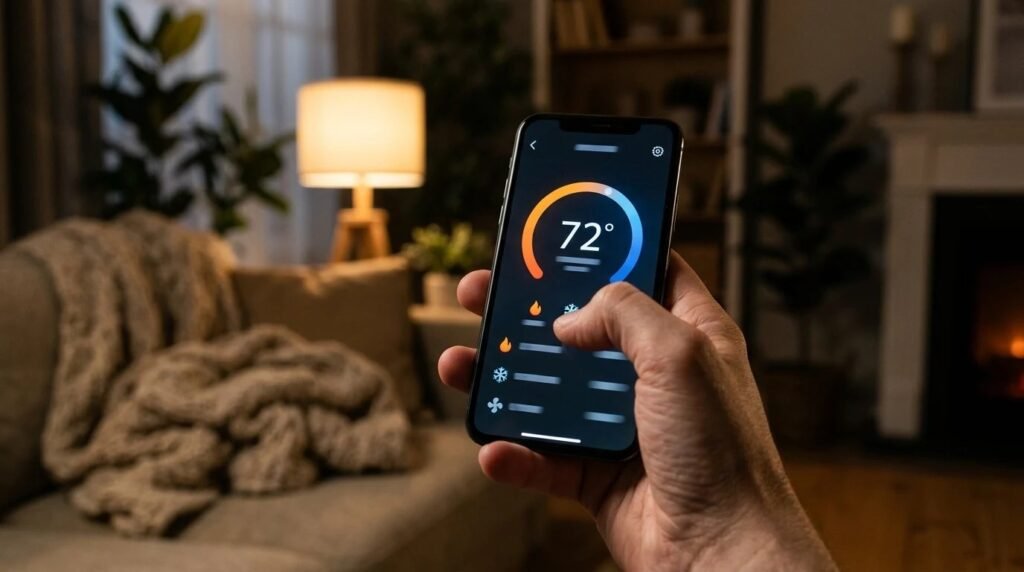
A programmable thermostat follows a fixed schedule you enter by hand. It does exactly what you told it, even if you change your routine. A smart thermostat connects to Wi-Fi, so you can adjust it from your phone, and many models use your phone’s location or built-in sensors to tell if you’re home. Some learn your habits over a week or two and build a schedule for you.
Side-by-side comparison
| Feature | Programmable | Smart |
|---|---|---|
| Schedule | You set it manually | Can learn or suggest one |
| Phone control | No | Yes |
| Away detection | No | Often, via phone location or sensors |
| Energy reports | No | Usually |
| Wi-Fi needed | No | Yes, for smart features |
| Typical price | Lower | Higher |

6 simple facts to know
- Savings depend on use. A schedule you follow is what saves money, not the gadget itself.
- Smart models fix forgetfulness. Away detection catches days when plans change.
- Check compatibility. Many smart thermostats need a C-wire for steady power.
- Heat pump owners, take care. Choose a model that handles heat pump recovery properly.
- Utility rebates are common. Many power companies offer money back on ENERGY STAR models.
- Placement still matters. See where to put a smart thermostat.
Installation: what to expect
Swapping a thermostat is one of the easier smart home upgrades, but take it slow. Turn off power to the heating system at the breaker, take a photo of the old wiring before you touch anything and label each wire. Most smart thermostat apps walk you through it step by step and check compatibility first. The most common snag is the C-wire, which provides steady power; some models include an adapter if you don’t have one. If your system is unusual, such as high-voltage baseboard heat or a complicated heat pump setup, call an HVAC pro.
Who should stick with programmable?
If you have a regular routine, you’ve already set a schedule and you don’t care about phone control, your programmable thermostat is probably doing a fine job. Keep it, check the schedule each season and save your money. If your schedule changes a lot, you forget to turn the heat down when you leave, or you want to control the temperature from bed, a smart thermostat pays for itself more reliably.

Getting the most from either one
Whichever you have, the savings come from setting the temperature back while you sleep or are away. The best thermostat setting for winter guide has a simple schedule to start with. And if you’re wondering whether to leave the heat running, read is it cheaper to leave the heat on all day.
Quick FAQ
Do smart thermostats really save money? ENERGY STAR estimates about 8 percent on heating and cooling on average for certified models. Results vary by home and habits.
Can I install one myself? Many people do. Turn off power at the breaker, label the wires and follow the app. Call a pro if you’re unsure.
Do they work without Wi-Fi? They keep heating and cooling, but remote and learning features need a connection.
Smart thermostat vs programmable thermostat: a quick recap
- Programmable: cheap and effective if you use the schedule.
- Smart: phone control, away detection, about 8 percent average savings for certified models.
- Check: wiring, heat pump support and rebates.
- Either way: setbacks are where the savings come from.
Final thoughts
The smart thermostat vs programmable thermostat decision isn’t about which is smarter. It’s about which one you’ll actually let do its job. Be honest about your habits, and you’ll pick the right one.
Your turn: do you actually use the schedule on your thermostat? Or is it stuck on “hold”? Tell us in the comments.
This comparison uses ENERGY STAR information, not our own testing. Check compatibility with your heating system before buying.